Connect with us

Commentary

Franklin Graham and the Glasgow Hydro: a significant judgment for Christian freedoms

Published

on

By David Robertson

In May 2020 Franklin Graham was due to lead an evangelistic campaign at one of Scotland’s premier venues, the SEC’s Hydro in Glasgow. He was then ‘cancelled’. At the time I wrote that it was a seminal moment in the UK.

When the event was cancelled, it was estimated to have cost the Billy Graham Evangelistic Association (BGEA) around £100,000. In a ruling this week, a judge at a civil hearing in Glasgow Sheriff Court ordered the SEC to pay the full £100,000. The full 280-page finding makes for fascinating reading and covers many issues from Christian doctrine to the constitutional basis of religious freedom.

Patrick Harvie, leader of the Scottish Greens and a member of the Scottish government, was among those who lobbied for the event to be cancelled. Glasgow City Council- the majority shareholder in the SEC – also asked for it to be cancelled.

There were no security concerns about the event, despite venue staff claiming this was a major factor in the cancellation. The reason it was cancelled was purely and simply prejudice. In fact, the cancellation rather than being for ‘equality’ was found by Sheriff McCormick to be against the equalities law.

Other comments from the Sheriff are worth reflecting on, not least because they are an encouraging sign that the law is prepared to protect the Church both from intolerant politicians and indeed itself. Some principles are clearly stated in the judgment.

1. We have the right to evangelise – even if some people don’t like it!

“The pursuer’s right to engage a speaker at the evangelical event – in furtherance of a religious or philosophical belief – is protected by law.”

2. It is illegal for those who disagree with us to discriminate against us

“It follows that in relation to a protected characteristic (here: religion or philosophical belief) no section of society can discriminate against those with whom he, she or they disagree.”

3. It is illogical to seek to ban those you disagree with while professing belief in free speech

“A theme among those seeking cancellation of the event included prefacing their remarks with a professed belief in free speech while denying that right to others and denying third parties their choice to attend.”

4. It is not for the law to adjudicate on religious or philosophical beliefs

“The event on 30 May 2020 was a Christian evangelical outreach event. Whether others agree with, disagree with or even, as was submitted on behalf of the pursuer, find abhorrent the opinions of the pursuer or Franklin Graham is not relevant for the purposes of this decision. This applies even where, as I heard evidence, members within the Christian community may not agree with the pursuer. The court does not adjudicate on the validity of religious or philosophical beliefs.”

All of this is very encouraging. However, something not quite so encouraging is the sheriff’s remarks on the actions of two ministers of the Church of Scotland.

“I have edited the names of a Member of the Scottish Parliament (MSP) and two Ministers of the Church of Scotland. I do so primarily because although their lobbying/writings featured in the case, they were not witnesses. In addition, the (on occasion, polemical) terms of what they were reported to have written and their mischaracterisation of the event was neither supported by the facts nor by either party to the case.”

One of these two ministers didn’t only speak out against Franklin Graham – as he was entitled to do – but sought to have him banned. It is extraordinary that a Church of Scotland minister sought to have the secular authorities prevent the Gospel being preached in Glasgow – a city whose motto is “Let Glasgow flourish by the preaching of the Word”.

And note the damning judgment of the sheriff, that these ministers in their polemical writings mischaracterised the nature of the event – a mischaracterisation which was not supported by the facts. What an embarrassment to the Church of Scotland that two of its ministers were found to have ‘misrepresented’ things contrary to the facts, in order to prevent another minister with whom they disagreed, from preaching the Gospel.

If ever there was a case for church discipline and admonition, then this is surely it. But such is the current drift of the Church of Scotland that it is extremely unlikely any action will be taken.

Overall, the judgment is an enormously significant one for the Church in Scotland and the rest of the UK. It should be read and pondered by church leaders and lawyers. And thanks should be given to God for such a clear judgment – defending religious freedom and our right to preach the Gospel. May we use that freedom wisely.

An encouraging footnote. The new equalities minister, Kemi Badenoch, this week declared in the House of Commons that “the Equality Act is a shield, not a sword, it is there to protect people of all characteristics, young or old, male or female, black or white, gay or straight”.

Pink News and other LGBT activists are up in arms about Badenoch’s appointment – precisely because they see ‘equality’ as a sword to attack others, not a shield to protect all.

Continue Reading
Click to comment

Leave a Reply

Your email address will not be published. Required fields are marked *

Commentary

When Benny Hinn Said Sorry: Lessons for Uganda’s Pastors Amid Gashumba Row

Published

on

By

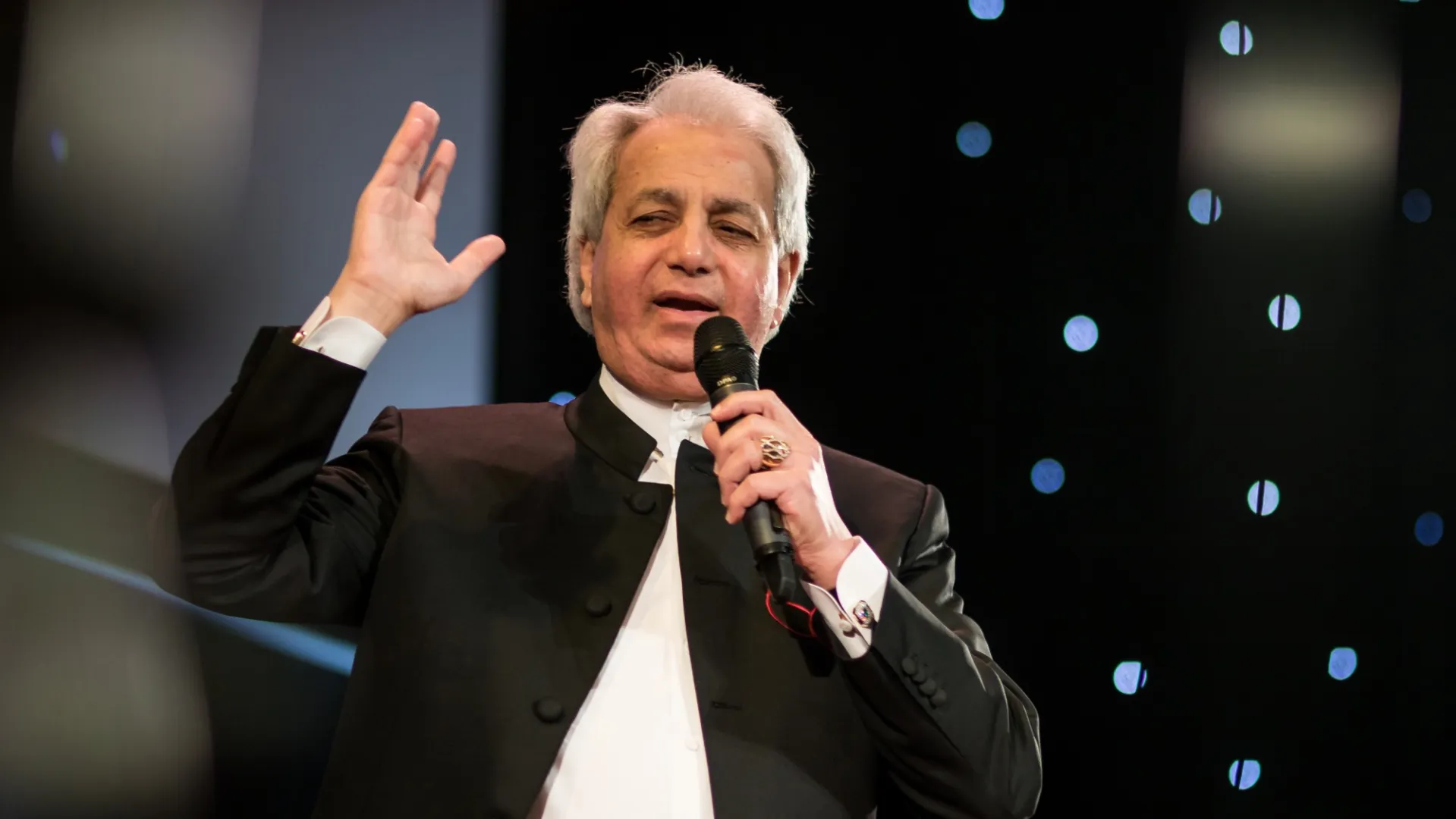
KAMPALA — As Uganda’s religious community grapples with a growing dispute over miracle claims, prophetic declarations and the conduct of prominent pastors, an earlier admission by American televangelist Benny Hinn offers a compelling reference point for the debate.

In May 2024, Hinn, one of the world’s best-known televangelists, publicly acknowledged two major regrets from his decades in ministry: inaccurate prophecies and his involvement in prosperity-gospel preaching.

Speaking in an interview with Stephen Strang on The Strang Report, Hinn admitted that some prophecies he had delivered were not accurate or from God, and apologised for statements and actions he said he should not have made.

“Sadly, there were some prophecies I gave that were not accurate or from the Lord,” Hinn said, according to the interview transcript.

He asked those affected to forgive him, acknowledging that his mistakes had caused harm and damaged his reputation.

His remarks are particularly relevant as Ugandan social commentator Frank Gashumba challenges pastors who claim miraculous healing powers to demonstrate those abilities under verifiable conditions.

Hinn’s regret over prosperity preaching

Hinn also expressed regret over his past involvement in prosperity-gospel circles, explaining that pressure associated with ministry growth and fundraising had influenced some of his decisions.

He said he had reached a decision in 2019 to distance himself from what he described as the “gimmickry” associated with prosperity-based ministry.

“Sadly, I let pressure get to me. And because of that pressure, I said things and did things I should not have done. And for that, really, I am sorry,” Hinn said in the interview. <Cite refs={[“turn507320search0″,”turn507320search4”]}/>

Prosperity theology, in its various forms, connects faith with material well-being, health or financial success. Critics have raised concerns about approaches that imply donations, offerings or particular expressions of faith guarantee wealth or physical healing.

Hinn’s comments did not amount to a rejection of Christianity or every form of teaching about prosperity. Rather, he expressed regret over practices he believed had departed from the biblical principles he wanted to follow.

His admission illustrates how questions about fundraising, prophetic claims and the responsibility of religious leaders have also featured in debates within international evangelical Christianity.

Uganda’s growing debate over miracle claims

In Uganda, Gashumba’s challenge has generated heated exchanges between the commentator and several religious leaders.

Gashumba initially offered Shs200 million before increasing the amount to Shs500 million for a pastor willing to demonstrate claimed healing abilities under agreed conditions involving a seriously ill patient at a hospital.

He has maintained that his criticism targets preachers he accuses of exploiting believers, rather than Christianity itself.

The dispute has drawn responses from prominent religious figures, including Pastor Robert Kayanja, while Apostle Grace Lubega of Phaneroo Ministries International and Prophet Elvis Mbonye of Zoe Fellowship Ministries have featured in the wider public debate.

Pastor Martin Ssempa has also been reported as supporting Gashumba’s challenge.

The controversy has raised broader questions about what constitutes credible evidence for miraculous healing, how prophetic declarations should be assessed and what responsibilities religious leaders owe their followers.

However, the existence of the dispute does not establish that any particular Ugandan pastor has committed fraud or knowingly made false claims. Such conclusions would require evidence relating to specific allegations.

A question of accountability, not simply faith

Hinn’s admission provides a useful comparison because it demonstrates that concerns about prophetic accuracy and prosperity preaching are not confined to Uganda or raised exclusively by critics outside the church.

In his interview, Hinn acknowledged that he had sometimes spoken under the mistaken belief that God had shown him something. He also recognised that inaccurate declarations could affect people’s lives and his ministry’s reputation.

That raises a question for Uganda’s religious debate: how should a preacher respond when a prophecy does not materialise or a claim about healing is challenged?

For critics of some forms of contemporary Pentecostal preaching, the concern is not the belief that God can heal. It is whether claims presented as supernatural interventions are described accurately, whether testimonies can be independently substantiated and whether vulnerable people are encouraged to make financial or medical decisions on the strength of promises that may not be fulfilled.

Religious leaders, meanwhile, have argued that spiritual matters cannot always be reduced to public demonstrations or financial wagers.

The distinction matters. A faith-based belief in divine healing is not, by itself, evidence of wrongdoing. Equally, invoking faith does not remove the responsibility to communicate honestly about what has been witnessed, verified or promised.

Could international evangelical networks face similar questions?

Hinn’s international profile makes his admission particularly significant as a point of comparison for Uganda’s religious debate.

International evangelical networks connect preachers through conferences, crusades, television broadcasts, digital platforms and church partnerships. Those connections can expand a ministry’s reach, but they can also expose its teachings and public claims to scrutiny beyond its home country.

Hinn’s admission shows that questions about prophetic accuracy and prosperity preaching have been debated within internationally influential ministries themselves. It does not, however, establish that his remarks have changed the relationships of Ugandan pastors with their American counterparts.

For Ugandan ministries seeking to build or maintain international credibility, the broader lesson is that public reputation depends not only on the size of a congregation or the reach of a ministry, but also on how leaders respond to legitimate questions about their conduct and claims.

A willingness to correct mistakes, explain disputed statements and distinguish personal testimony from independently established fact could help build public trust.

‘Know them by their fruits’

The debate has also drawn a biblical intervention from Chief of Defence Forces Gen Muhoozi Kainerugaba, who urged caution in discussions about pastors and warned against despising religious messengers who appear insignificant.

Invoking the humble circumstances of Jesus Christ’s birth in a Bethlehem manger, Muhoozi also cited Matthew 7:16: “Ye shall know them by their fruits.”

His remarks offered a framework that recognises the importance of respecting religious messengers while examining their conduct.

In the context of Hinn’s admission, that principle invites reflection on the responsibilities of religious leaders, the consequences of inaccurate prophetic declarations and the importance of accountability when mistakes are acknowledged.

It also calls for fairness towards those facing criticism: accusations should be evaluated on their evidence rather than treated as established facts merely because they have attracted public attention.

A wider lesson for the Church

Hinn’s 2024 interview does not settle the questions raised by Gashumba’s challenge. Nor does it establish that the circumstances surrounding the American televangelist are identical to those involving Uganda’s pastors.

It does, however, offer an example of a prominent preacher publicly acknowledging mistakes in two contentious areas of ministry.

As Uganda’s debate continues, the central question is whether the dispute will remain a confrontation of public accusations or lead to more substantive discussions about the verification of healing claims, the responsible exercise of prophetic authority and transparency in church fundraising.

For believers, the challenge is to distinguish between criticism of questionable practices and an attack on faith itself. For religious leaders, it is to demonstrate that respect for spiritual authority can coexist with honesty, accountability and compassion for the people who place their trust in them.


Continue Reading

Commentary

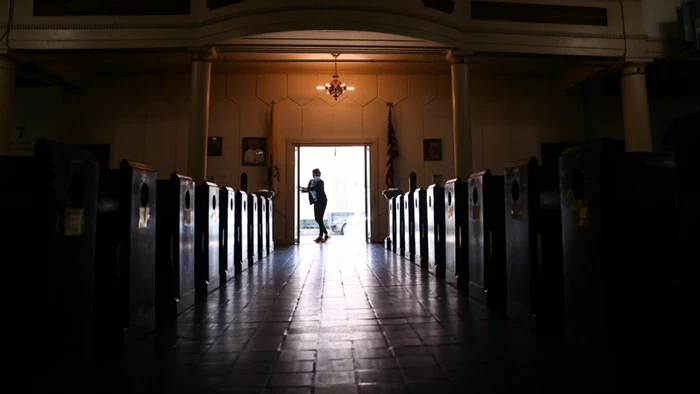
Decline of Christianity in US Shows No Signs of Stopping

Published

on

By

Pew Research Center isn’t ruling out a future religious revival in America.

But given the country’s steady trends away from faith affiliation, experts don’t know what it would look like.

Analyzing surveys about religious identity and religious “switching” going back to 1972 and trying to project the American religious landscape out to the year 2070, they can’t even say what demographic signs might indicate a coming swell of conversions.

“We’ve never seen it, and we don’t have the data to model a religious reversal,” Pew senior researcher Stephanie Kramer told CT. “There are some who say that revival never happens in an advanced economy. After secularization, you can’t put toothpaste back in the tube. But we don’t know that. We just don’t have the data.”

The data they do have, from 50 years of research by the General Social Survey and Pew’s own survey of 15,000 adults in 2019, indicates the current trend is inexorable. People are giving up on Christianity. They will continue to do so. And if you’re trying to predict the future religious landscape in America, according to Pew, the question is not whether Christianity will decline. It’s how fast and how far.

In a new study out today, Pew projects that in 2070, Christians will likely make up less than half the US population.

Currently, 64 percent of people say they are Christian, but nearly a third of those raised Christian eventually switch to “none” or “nothing in particular,” while only about 20 percent of those raised without religion become Christian. If that ratio of switching continues at a steady pace, then in roughly half a century, only about 46 percent of Americans will identify as Christian.

If the rate of switching continues to accelerate, as it has since the 1990s, the percent calling themselves Christians will drop to 35.

The rate of change could also slow down. “Trends don’t tend to continue forever,” Kramer said, “and there’s probably a core of Christians who are committed and never going anywhere.” If the future takes that path, Pew predicts slightly less than 40 percent of the population will say they are Christian in 2070.

“While the scenarios in this report vary in the extent of religious disaffiliation they project,” the study says, “they all show Christians continuing to shrink as a share of the U.S. population, even under the counterfactual assumption that all switching came to a complete stop in 2020.”

Few of the people leaving Christianity appear to be joining other religions. In America today, Jews, Muslims, Hindus, and all non-Christian faiths account for about 6 percent of the population. There isn’t enough information for researchers to isolate differences between these groups. They project that, overall, non-Christian faiths will double in America by 2070, mostly by having children and raising them in the religion.

The dramatic change, according to Pew, will come with the “nones.” People who say they don’t have a religious identity—though many still embrace some Christian beliefs and engage in various spiritual practices—are projected to rise from about 30 percent today to as much as 52 percent in 50 years.

“Modeling the Future of Religion in America” is a new enterprise for Pew, which has previously focused on landscaping religion in America, not trying to predict where things will go. The picture the study paints, though, is not that different from what Pew and other religion researchers have been saying in recent years.

Public Religion Research Institute founder Robert P. Jones wrote an obituary for “white Christian America” in 2019, based on changing racial demographics and trends in religious disaffiliation.

Gallup started regularly giving people the option of “none” on a religious preference question in 2008. The number of people giving that answer immediately started increasing. In 2012, Pew reported that nones were “on the rise,” prompting scores of analyses on the phenomenon.

Ryan Burge, a political science professor at Eastern Illinois University, wrote in his 2021 book The Nones that there was a time when the religiously unaffiliated appeared to be “no more than a rounding error.” But then they “zoomed past 10 percent of the population by 1996, crossed the 15 percent threshold a decade later, and managed to reach 20 percent by 2014.” When he downloaded the raw data from the General Social Survey in 2018, the unaffiliated roughly equaled Catholics and evangelicals in size.

Pew’s new report does, however, clearly identify the mechanism driving the change. By isolating different demographic factors, it shows that declining Christian birthrates and non-Christian immigrants are not significant causes.

The main reason is switching—Christians deciding they are not Christians anymore. This mostly happens to people between the ages of 15 and 29, according to the report, with an additional 7 percent of Christians disaffiliating from the faith after the age of 30.

“Switching out has been happening steadily, which didn’t used to happen,” Kramer told CT. “It used to be that if you met someone on the street, and their father and mother were Christian, then they were Christian too. That’s not always true anymore. For about a third of people, that’s not true anymore.”

Pew does not have a theory about why more people are switching. The research center focuses on the data, leaving explanations to others.

Some, building on the work of the late sociologist Rodney Stark, have argued it’s caused by denominations growing more liberal. According to this argument, if a church emphasizes all the same issues and concerns as left-leaning political activists, then there’s no reason to do the extra work of belonging to a church. They point to shrinking mainline churches. The United Church of Christ, the first mainline denomination to embrace same-sex marriage, lost more than 40 percent of its members in the 17 years after that decision, for example.

Others have connected the trend to conservative politics, arguing evangelical association with Republicans is driving young people away from church. The rise of the exvangelical moment and the uptick in the number of nones in some election years is cited as evidence.

It could be that both Left and Right are having this effect, but Kramer cautions that the trend in the US appears similar to what researchers have seen in other countries, where the political landscape looks completely different. Perhaps it’s not the decisions of churches driving the change, but broader social developments.

Many sociologists, going back to Max Weber, have argued that secularization is inevitable as society advances. Globalization, industrialization, and technology make it harder and harder for people to believe. The biggest change that’s visible today, though, isn’t really a rapid change in beliefs but affiliations. Atheists remain in the single digits in the US. But while many nones affirm the existence of God and even pray, they don’t want to be connected to a religious group or identity.

“We don’t know what all is driving this,” Kramer said. “There are some theories that make sense, but we don’t know.”

As the researchers charted the possible paths for the future, they tried to keep in mind what they didn’t know and the data they didn’t have. Extrapolating from trends doesn’t account for the kind of dramatic events that shape generations.

“It is possible,” the report says, “that events outside the model—such as war, economic depression, climate crisis, changing immigration patterns or religious innovation—could reverse the reverse current religious switching trends.”

Revival could happen. There’s just nothing in the current data that indicates it will.

CT

Continue Reading

Trending

Copyright © 2017 Zox News Theme. Theme by MVP Themes, powered by WordPress.

Exit mobile version