Connect with us

News

DS Tayebwa vows to block homosexuality, abortion conditions in relations with EU

Published

on

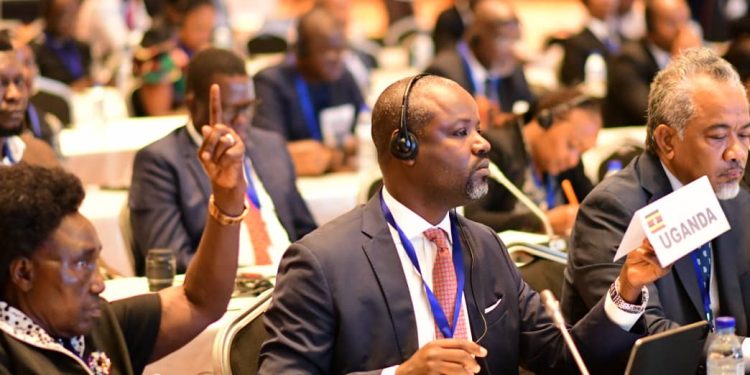
MAPUTO — A Ugandan delegation at the ongoing 61st session of the Organisation of the African, Caribean and Pacific States Parliamentary Assembly (OACPS PA) and 42nd Session of the ACP-European Union joint Parliamentary Assembly (ACP-EU JPA) in Maputo City, Mozambique has vowed to oppose plans by pro-gay nations to impose the promotion of homosexuality and abortion as new conditions for trade and aid relationships with European Union.

The delegation which is attending a Joint Parliamentary Assembly is being led by the Deputy Speaker of Parliament Thomas Tayebwa, a vocal critic of homosexuality, abortion and neocolonialism.

Other Members on the delegation include; Hon. Theodore Ssekikubo the MP for Lwemiyaga County, Hon Cecilia Barbara Atim Ogwal, the Woman MP for Dokolo District, Hon Maurice Kibalya the MP for Bugabula South, Hon Elijah Okupa, the MP for Kasilo County, Dr Samuel Opio Acuti for MP Kole North and Hon Lucy Okello.

The 42nd Session of the African, Caribbean and Pacific-European Union Joint Parliamentary Assembly was opened by H.E Filipe Jacinto Nyusi, President of Mozambique in Maputo

The joint sitting was on Monday officially opened by President Filipe Nyusi of Mozambique who commended the Organization for it’s prime role in the economic and social development of its member states.

President Nyusi also called upon participating member states to focus more on the climate agenda and how to deal with risks related to Natural disasters.

The deputy speaker said member countries are also engaging on the post Cotonou Agreement which governs the ACP-EU relations.

Diplomatic, trade and aid relationships between the European Union and ACP states are governed by the Cotonou Agreement.

The agreement includes a dialoge on ‘’political issues of mutual concern or of general significance’’ and ‘’discrimination of any kind’’.

Tayebwa mentioned a deep concern over calls by the EU to adopt homosexuality by the ACP countries, a development he said Uganda would vehemently reject.

“We shall be making a report to our president as Parliament which will be a guiding tool before the signing of the Post Cotonou Agreement,” the deputy speaker said.

He added: “We are demanding that we broadly define the issue of human rights. We have discovered that with the Post Cotonou agreement, there hidden clauses around human rights. Clauses to do with Sexuality, promotion of LGBT/homosexuality and clauses to do with abortion.”

Tayebwa said such practices are un Africa and while “the EU is demanding that we take a certain root, they should also know the character of our society”.

“We are a society that isn’t ready for homosexuality and we are a society that’s not ready for abortion,” Tayebwa said, noting that “we as Africa, believe that the institution of the family is at the core of whatever we are doing”.

Representatives from the pro-gay nations insist on an amendment to the ACP-EU rules to have the debate on the rights of homosexuals even after objections African members.

Issues related to climate change and food security; health and the fight against terrorism; women empowerment for political leadership; migration and sustainable growth, among other current matters have been discussed—with the ACP-EU describing Uganda’s women’s emancipation as one of the most successful ventures an African country has ever undertaken.

Tayebwa also said that Uganda was lauded on other key grounds including passing important laws that have helped to combat money laundering and allowing the youths to legislative on the their affairs.

Uganda has the youngest Parliamentarians with an average age of of 33.

Others countries in Africa, Caribbean and Pacific have an average age of 55 and beyond.

Hon. Cecilia Ogwala backed Tayebwa’s stance on rejecting homosexuality —saying Africa isn’t comfortable with EU’s conditions on sexual orientation and abortion.

“We are all geared up to make sure that whatever decision we take, it is in the interest of the people whom we represent.”

On moneylaudering, Hon Ogwala commended the Parliament of Uganda and President Museveni for being proactive.

“Uganda has been able to pass the law of 2013 (amended in 2015) and recently we passed another amended, Uganda is on course as far as taking control of the situation when it comes to money laundering”.

The ACP–EU Joint Parliamentary Assembly was created to bring together the elected representatives of the European Union (the Members of the European Parliament) and the elected representatives of the African, Caribbean and Pacific states (“ACP countries”) that have signed the Cotonou Agreement.

Since the entry into force of the Treaty on European Union and EU enlargement it has acquired a more prominent role.

A substantial part of the work of the JPA is directed towards promoting human rights and democracy and the common values of humanity, and this has produced joint commitments undertaken within the framework of the UN conferences.

The Joint Parliamentary Assembly meets twice a year in plenary session, alternately in the European Union and in an ACP State.

With a view to strengthening regional integration and fostering cooperation between national parliaments, meetings between EU and ACP members of parliament may be arranged at regional or subregional level.

Continue Reading
Click to comment

Leave a Reply

Your email address will not be published. Required fields are marked *

News

Pope Leo XIV appoints members of International Theological Commission

Published

on

By

Pope Leo XIV

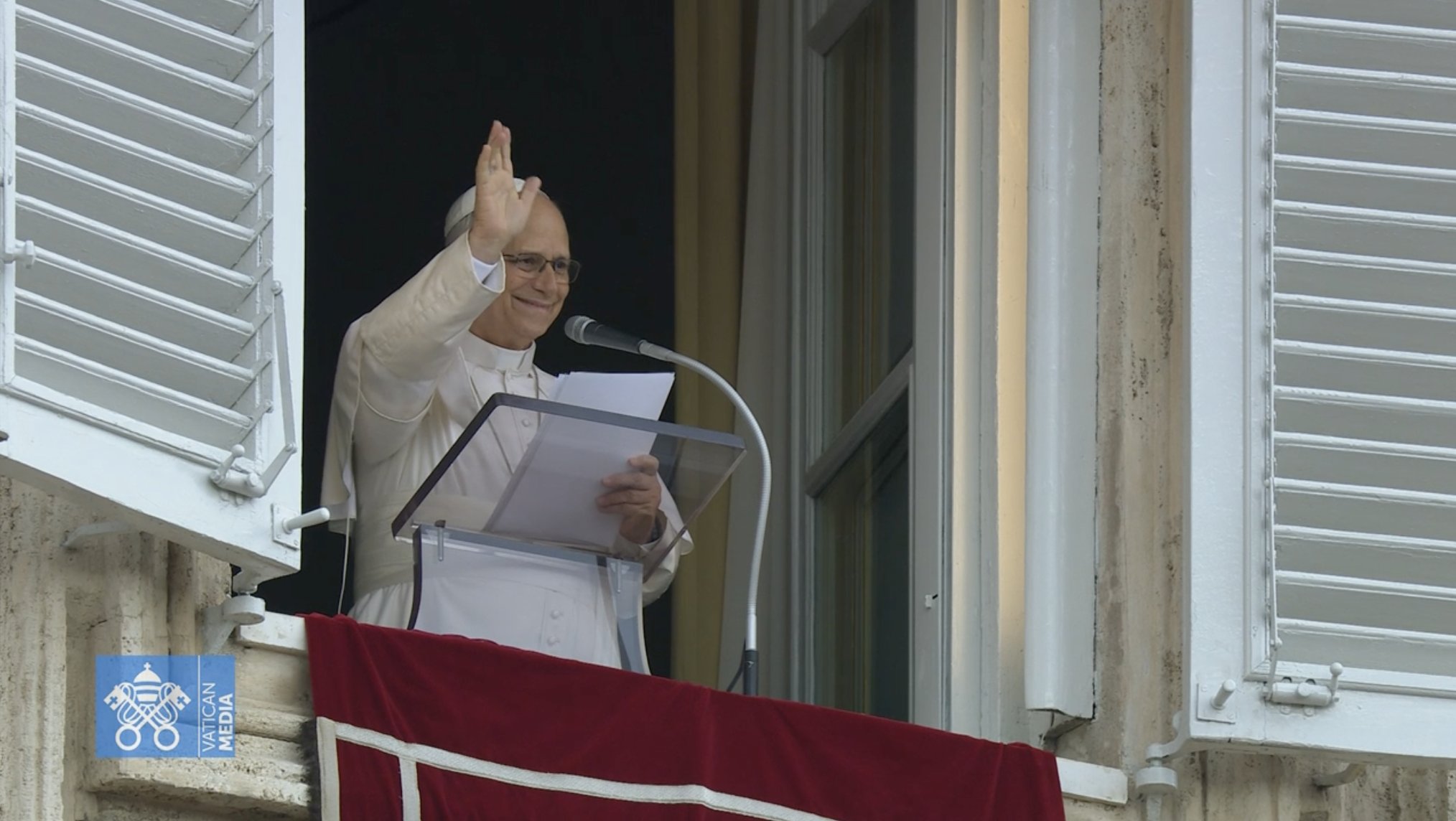
On Monday, Pope Leo XIV appointed 24 new members, confirming 6 others, including Msgr. Piero Coda for another five years as the Commission’s Secretary General.

The Commission bears the task of assisting the Holy See, particularly the Dicastery for the Doctrine of the Faith, in examining doctrinal questions of major importance and current relevance, bringing together theologians from different schools and nations.

As in the previous five years, the members also reflect a variety of ecclesial backgrounds, representing different states of life and religious charisms.

Increased lay representation

The number of women on the Commission has risen from five to eight, including five laywomen. Together with three laymen, they bring the total number of lay members to eight, double that of the previous term.

Europe accounts for 13 members, compared with 14 previously. Asia and Africa each have four representatives, up from three each, while South America has five, compared with four. North America retains three members, and Australia one.

The appointments mark the beginning of the Commission’s eleventh five-year term. Its customary plenary session is scheduled for November 23–27.

The Commission’s membership

The Holy See Press Office published the list of the Commission’s new members:

Monsignor Carlo Dell’Osso, Secretary of the Pontifical Institute of Christian Archaeology;

Monsignor Lubomír Žák, Full Professor at the Saints Cyril and Methodius Faculty of Theology of Palacký University Olomouc, Czechia;

Father Khaled Emmanuel Anatolios, Chair of the Department of Theology at the University of Notre Dame in South Bend, United States;

Father Ángel Cordovilla Pérez, Dean of the Faculty of Theology and the Faculty of Canon Law at Comillas Pontifical University in Madrid, Spain;

Father Tiago de Fraga Gomes, Professor at the School of Humanities of the Pontifical Catholic University of Rio Grande do Sul in Porto Alegre, Brazil;

Father Gilbert De Lima, Executive Secretary of the Commission for Theology and Doctrine of the Conference of Catholic Bishops of India;

Father Clarence Devadass, Director of the Catholic Research Centre in Kuala Lumpur, Malaysia;

Father Fabricio Leonel Forcat, Associate Professor at the Faculty of Theology of the Pontifical Catholic University of Argentina in Buenos Aires, Argentina;

Father Julián Arturo López Amozurrutia, Dean of the Faculty of Theology of the Pontifical University of Mexico;

Father Gaston Ogui Cossi, Dean of the Bobo-Dioulasso University Unit of the Catholic University of West Africa, Benin;

Father Csaba Török, Associate Professor at Esztergom Theological College, affiliated with the Faculty of Theology of Pázmány Péter Catholic University, Hungary;

Father Paul Béré, S.J., Dean of the Biblical Faculty of the Pontifical Biblical Institute of the Pontifical Gregorian University in Rome, Italy;

Father Michel Fédou, S.J., Professor Emeritus of the Faculty of Theology at Facultés Loyola Paris, France;

Father Bernhard Knorn, S.J., Full Professor at Sankt Georgen Graduate School of Philosophy and Theology in Frankfurt am Main, Germany;

Father Patrick Mwania, C.S.Sp., Vice Chancellor of Tangaza University in Nairobi, Kenya;

Father Jorge Alejandro Scampini, O.P., Full Professor at the Faculty of Theology of the Pontifical Catholic University of Argentina in Buenos Aires, Argentina;

Sister Shu Chin (Maria Teresa) Hu, F.I., Extraordinary Professor at the Fu Jen Faculty of Theology of Saint Robert Bellarmine in Taipei, Taiwan;

Professor Teresa Hyeon Soon Choi, Associate Professor at the Institute for Whole Person Education Center of Sogang University in Seoul, South Korea;

Professor Boyd Taylor Coolman, Associate Professor in the Theology Department at Boston College in Chestnut Hill, United States;

Professor Maria Teresa Fattori, Researcher at the University of Teramo, Italy;

Professor Claudia Leal Luna, Full Professor at the Pontifical John Paul II Theological Institute for Marriage and Family Sciences in Rome, Italy;

Professor Sara Parvis, Associate Professor at the School of Divinity of the University of Edinburgh, Scotland, United Kingdom;

Professor Jan-Heiner Tück, Head of the Department of Dogmatic Theology and the History of Dogma at the University of Vienna, Austria;

Professor Anne-Sophie Vivier-Muresan, Dean of the Faculty of Theology at the Catholic Institute of Paris, France.

The full list also includes the six members confirmed for another five-year term: Msgr. Piero Coda, Secretary General; Father Alberto Cozzi; Father Simon Francis Gaine; Professor Reinhard Huetter; Sister Isabell Naumann; and Sister Josee Ngalula.

Serving the Church’s doctrinal work

Pope Paul VI established the International Theological Commission in 1969 within the then-Congregation for the Doctrine of the Faith, now the Dicastery.

The Commission brings together theologians from different schools and nations, distinguished by their scholarship and fidelity to the Church’s Magisterium.

Its members, numbering no more than 30, are appointed by the Pope for five-year terms, following a proposal by the Dicastery’s Prefect and consultation with Bishops’ Conferences.

The results of its studies are submitted to the Pope and made available to the Dicastery for its work.

Pope John Paul II promulgated the Commission’s definitive statutes in 1982.

Over the course of its history, the Commission has published 33 documents with the approval of its president, the Prefect of the Dicastery for the Doctrine of the Faith.

Continue Reading

News

Fr Ssekabira Accused of Shs500m Money Laundering Remanded

Published

on

By

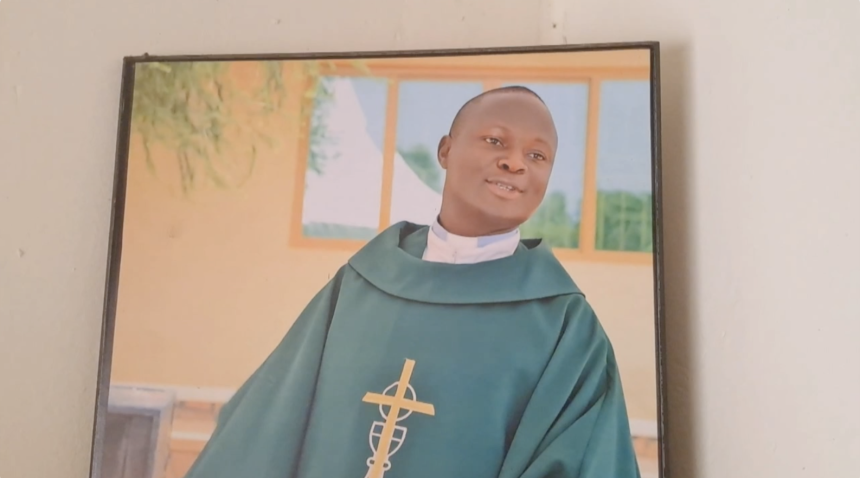
Rev. Fr. Deusdedit Ssekabira, a Catholic priest who had been detained for weeks following his arrest by Uganda Peoples’ Defence Forces (UPDF) soldiers in Masaka District earlier this month, has appeared before the Masaka Magistrate’s Court for the first time.

However, the presiding magistrate, Abdallah Kayiza, remanded Fr. Ssekabira until January 21, 2026, after ruling that the court lacks jurisdiction to hear the money laundering case.

Fr. Ssekabira is accused of money laundering, with prosecutors alleging that he concealed Shs500 million, which the state claims he knew or suspected to be proceeds of crime. The charge is brought under provisions of the Anti-Money Laundering Act.

Court documents indicate that the alleged offence relates to financial transactions carried out over a period spanning several years, though details of the prosecution’s evidence were not presented during the brief appearance, as the court did not take plea.

The priest’s court appearance comes after weeks of public uncertainty over his whereabouts. Early this month, reports circulated on social media claiming he had been abducted by armed men believed to be soldiers. The Uganda Police Force later said it was verifying the reports.

Subsequently, the UPDF confirmed that Fr. Ssekabira was in lawful custody, stating that he had been arrested over alleged involvement in what the military described as “violent subversive activities against the state.” The military did not initially disclose that he would face financial crime charges.

Fr. Ssekabira will remain on remand as the state prepares to take the case to a court with competent jurisdiction to hear money laundering offences. There was no immediate comment from his lawyers or from the Catholic Church following the court session.

Continue Reading

News

American Missionary Dies in Kampala Train Accident

Published

on

By

A tragic train–vehicle collision at the Wankoko level crossing in Bugolobi has claimed the life of an American missionary, Savannah Gardner, Ugandan authorities have confirmed.

According to a statement issued by Uganda Railways Corporation (URC), the accident occurred on the evening of Friday, December 19, at about 5:37pm, involving a commuter train travelling from Kampala to Namanve and a private motor vehicle, a Mitsubishi Pajero, registration number UBF 582X.

URC said the level crossing was manned by both Railway Police and URC staff at the time, and traffic on all approaches had been halted to allow the train to pass. Preliminary reports indicate that the vehicle attempted to cross the railway line, resulting in a collision with the oncoming train.

Savannah Gardner died at the scene. Her husband, Matthew Gardner, sustained internal injuries and is currently receiving treatment in hospital. Their two young children, Jedidiah (4) and Mason (1), were not injured.

The Gardner family are missionaries serving in Uganda under Baptist International Missions, Inc. (BIMI). A prayer appeal shared by fellow missionaries said Savannah “went to Heaven instantly,” while noting that Matthew remains hospitalised but in stable condition.

URC said it has launched internal investigations and is cooperating fully with the Uganda Police Force to establish the exact circumstances surrounding the incident.

“Our heartfelt condolences go out to the family of the late Savannah Gardner,” URC said in its statement, while urging all road users to exercise extreme caution when approaching railway crossings.

The incident has renewed public attention on road and rail safety in Kampala, particularly at level crossings along busy urban routes.

Continue Reading

Trending

Copyright © 2017 Zox News Theme. Theme by MVP Themes, powered by WordPress.