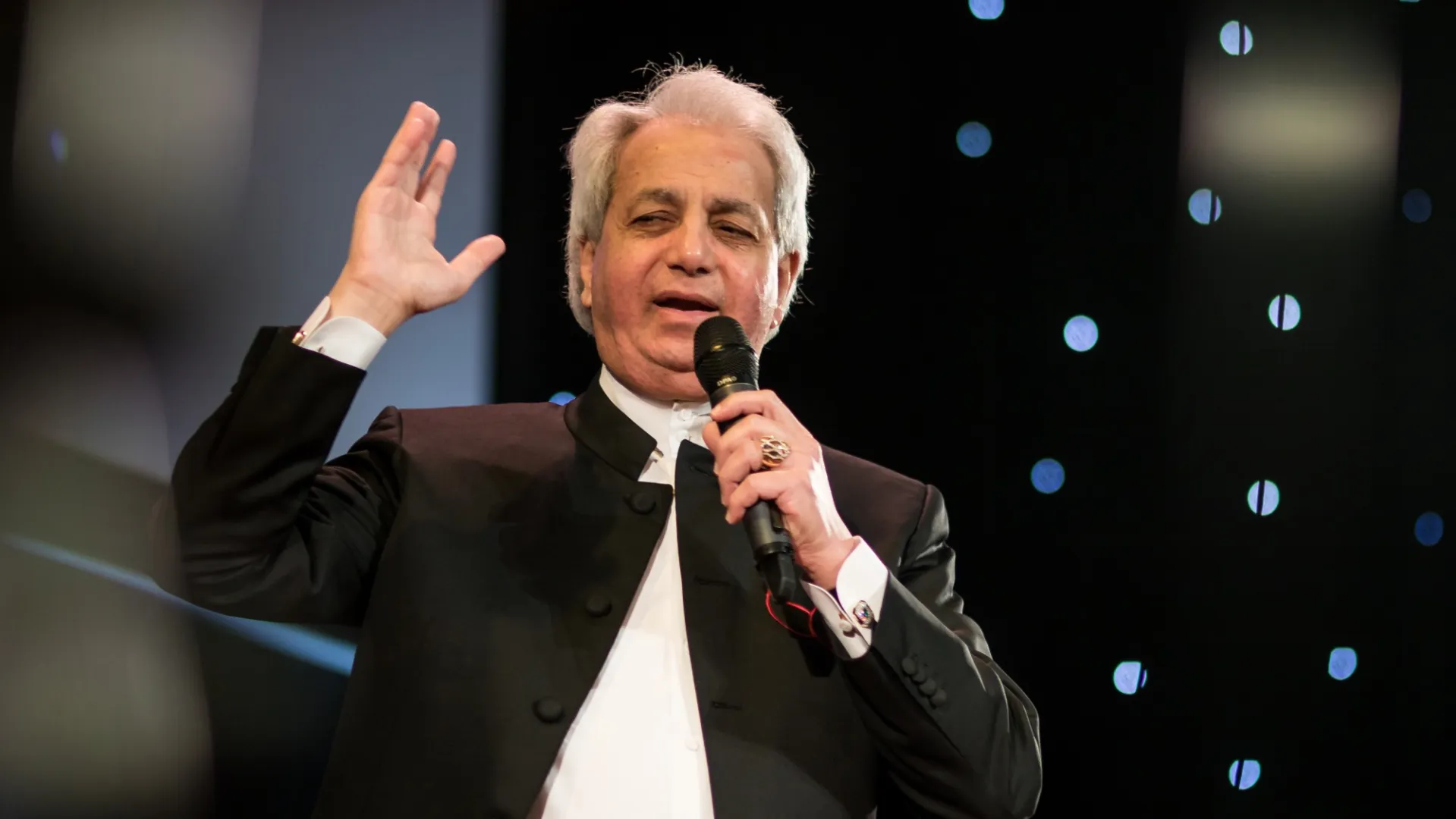
KAMPALA — As Uganda’s religious community grapples with a growing dispute over miracle claims, prophetic declarations and the conduct of prominent pastors, an earlier admission by American televangelist Benny Hinn offers a compelling reference point for the debate.
In May 2024, Hinn, one of the world’s best-known televangelists, publicly acknowledged two major regrets from his decades in ministry: inaccurate prophecies and his involvement in prosperity-gospel preaching.
Speaking in an interview with Stephen Strang on The Strang Report, Hinn admitted that some prophecies he had delivered were not accurate or from God, and apologised for statements and actions he said he should not have made.
“Sadly, there were some prophecies I gave that were not accurate or from the Lord,” Hinn said, according to the interview transcript.
He asked those affected to forgive him, acknowledging that his mistakes had caused harm and damaged his reputation.
His remarks are particularly relevant as Ugandan social commentator Frank Gashumba challenges pastors who claim miraculous healing powers to demonstrate those abilities under verifiable conditions.
Hinn’s regret over prosperity preaching
Hinn also expressed regret over his past involvement in prosperity-gospel circles, explaining that pressure associated with ministry growth and fundraising had influenced some of his decisions.
He said he had reached a decision in 2019 to distance himself from what he described as the “gimmickry” associated with prosperity-based ministry.
“Sadly, I let pressure get to me. And because of that pressure, I said things and did things I should not have done. And for that, really, I am sorry,” Hinn said in the interview. <Cite refs={[“turn507320search0″,”turn507320search4”]}/>
Prosperity theology, in its various forms, connects faith with material well-being, health or financial success. Critics have raised concerns about approaches that imply donations, offerings or particular expressions of faith guarantee wealth or physical healing.
Hinn’s comments did not amount to a rejection of Christianity or every form of teaching about prosperity. Rather, he expressed regret over practices he believed had departed from the biblical principles he wanted to follow.
His admission illustrates how questions about fundraising, prophetic claims and the responsibility of religious leaders have also featured in debates within international evangelical Christianity.
Uganda’s growing debate over miracle claims
In Uganda, Gashumba’s challenge has generated heated exchanges between the commentator and several religious leaders.
Gashumba initially offered Shs200 million before increasing the amount to Shs500 million for a pastor willing to demonstrate claimed healing abilities under agreed conditions involving a seriously ill patient at a hospital.
He has maintained that his criticism targets preachers he accuses of exploiting believers, rather than Christianity itself.
The dispute has drawn responses from prominent religious figures, including Pastor Robert Kayanja, while Apostle Grace Lubega of Phaneroo Ministries International and Prophet Elvis Mbonye of Zoe Fellowship Ministries have featured in the wider public debate.
Pastor Martin Ssempa has also been reported as supporting Gashumba’s challenge.
The controversy has raised broader questions about what constitutes credible evidence for miraculous healing, how prophetic declarations should be assessed and what responsibilities religious leaders owe their followers.
However, the existence of the dispute does not establish that any particular Ugandan pastor has committed fraud or knowingly made false claims. Such conclusions would require evidence relating to specific allegations.
A question of accountability, not simply faith
Hinn’s admission provides a useful comparison because it demonstrates that concerns about prophetic accuracy and prosperity preaching are not confined to Uganda or raised exclusively by critics outside the church.
In his interview, Hinn acknowledged that he had sometimes spoken under the mistaken belief that God had shown him something. He also recognised that inaccurate declarations could affect people’s lives and his ministry’s reputation.
That raises a question for Uganda’s religious debate: how should a preacher respond when a prophecy does not materialise or a claim about healing is challenged?
For critics of some forms of contemporary Pentecostal preaching, the concern is not the belief that God can heal. It is whether claims presented as supernatural interventions are described accurately, whether testimonies can be independently substantiated and whether vulnerable people are encouraged to make financial or medical decisions on the strength of promises that may not be fulfilled.
Religious leaders, meanwhile, have argued that spiritual matters cannot always be reduced to public demonstrations or financial wagers.
The distinction matters. A faith-based belief in divine healing is not, by itself, evidence of wrongdoing. Equally, invoking faith does not remove the responsibility to communicate honestly about what has been witnessed, verified or promised.
Could international evangelical networks face similar questions?
Hinn’s international profile makes his admission particularly significant as a point of comparison for Uganda’s religious debate.
International evangelical networks connect preachers through conferences, crusades, television broadcasts, digital platforms and church partnerships. Those connections can expand a ministry’s reach, but they can also expose its teachings and public claims to scrutiny beyond its home country.
Hinn’s admission shows that questions about prophetic accuracy and prosperity preaching have been debated within internationally influential ministries themselves. It does not, however, establish that his remarks have changed the relationships of Ugandan pastors with their American counterparts.
For Ugandan ministries seeking to build or maintain international credibility, the broader lesson is that public reputation depends not only on the size of a congregation or the reach of a ministry, but also on how leaders respond to legitimate questions about their conduct and claims.
A willingness to correct mistakes, explain disputed statements and distinguish personal testimony from independently established fact could help build public trust.
‘Know them by their fruits’
The debate has also drawn a biblical intervention from Chief of Defence Forces Gen Muhoozi Kainerugaba, who urged caution in discussions about pastors and warned against despising religious messengers who appear insignificant.
Invoking the humble circumstances of Jesus Christ’s birth in a Bethlehem manger, Muhoozi also cited Matthew 7:16: “Ye shall know them by their fruits.”
His remarks offered a framework that recognises the importance of respecting religious messengers while examining their conduct.
In the context of Hinn’s admission, that principle invites reflection on the responsibilities of religious leaders, the consequences of inaccurate prophetic declarations and the importance of accountability when mistakes are acknowledged.
It also calls for fairness towards those facing criticism: accusations should be evaluated on their evidence rather than treated as established facts merely because they have attracted public attention.
A wider lesson for the Church
Hinn’s 2024 interview does not settle the questions raised by Gashumba’s challenge. Nor does it establish that the circumstances surrounding the American televangelist are identical to those involving Uganda’s pastors.
It does, however, offer an example of a prominent preacher publicly acknowledging mistakes in two contentious areas of ministry.
As Uganda’s debate continues, the central question is whether the dispute will remain a confrontation of public accusations or lead to more substantive discussions about the verification of healing claims, the responsible exercise of prophetic authority and transparency in church fundraising.
For believers, the challenge is to distinguish between criticism of questionable practices and an attack on faith itself. For religious leaders, it is to demonstrate that respect for spiritual authority can coexist with honesty, accountability and compassion for the people who place their trust in them.