Connect with us

Politics

Vatican, China Renew Agreement on Appointing Bishops

Published

on

VATICAN CITY (CNS) — Saying it is committed to “respectful dialogue” with China’s communist government and to “fostering the mission of the Catholic Church and the good of the Chinese people,” the Vatican announced it has renewed its agreement with China on the appointment of bishops.

The “provisional agreement,” forged in 2018 and renewed in 2020, has been extended for another two years, the Vatican announced Oct. 22.

The text of the agreement has never been made public, but Vatican officials said it outlines procedures for ensuring Catholic bishops are elected by the Catholic community in China and approved by the pope before their ordinations and installations.

In the past four years only six bishops have been named and installed under the terms of the agreement.

Cardinal Pietro Parolin, Vatican secretary of state, interviewed by Vatican News Oct. 22, noted that the achievements of the agreement also included the lifting of the excommunications or irregular status of seven bishops who had been ordained with government approval, but not the Vatican’s consent and, he said, “the first six ‘clandestine’ bishops have also succeeded in being registered and thus have had their position made official, being recognized as bishops by public institutions.”

Many dioceses are still without bishops or have very elderly bishops, he said, but the process is continuing.

However, Cardinal Parolin also acknowledged “there are dioceses in which, despite all efforts and good will, no fruitful dialogue exists with local authorities.”

Posters of Chinese President Xi Jinping hang on the wall of the house of a Tibetan Catholic during a Mass celebrated by Father Yao Fei on Christmas Eve in Niuren village, in China’s Yunnan province, in this Dec. 24, 2018, file photo. (CNS photo/Tyrone Siu, Reuters)

The agreement is still “provisional” because “we are still in the experimentation phase,” the cardinal said. “As is always the case, such difficult and delicate situations require adequate time for implementation in order to then be able to verify the effectiveness of the result and identify possible improvements.”

“Pope Francis — with determination and patient foresight — has decided to continue along this path, not under the illusion of finding perfection in human rules, but in the concrete hope of being able to assure Chinese Catholic communities, even in such a complex context, of the guidance of pastors who are worthy and suitable for the task entrusted to them,” Cardinal Parolin said.

The cardinal reaffirmed what Pope Francis and Vatican officials have said all along: giving up full control over the choice of bishops is not what the Vatican would have hoped for, but it seemed to be a good first step toward ensuring greater freedom and security for the Catholic community in China.

The deal, however, has been criticized by several prominent figures, including by Cardinal Joseph Zen Ze-kiun, retired archbishop of Hong Kong, who said the agreement would “kill” the unofficial or underground church in China, whose leaders refuse to register with the state-run Chinese Catholic Patriotic Association.

Cardinal Parolin told Vatican News that the agreement is not primarily about diplomatic relations with China. Rather, he said, “it mainly concerns aspects that are essential to the daily life of the church in China. I am thinking, for example, of the validity of the sacraments celebrated and the certainty for millions of Chinese faithful that they will be able to live out their faith in full Catholic communion, without thereby being suspected of not being loyal citizens to their country.”

Cardinal Luis Antonio Tagle, whose maternal grandfather was Chinese, told Fides, the news agency of the Dicastery for Evangelization, that in China “historical events had led to painful wounds within the church, to the point of casting a shadow of suspicion on the sacramental life itself. So, there were things at stake that touch the intimate nature of the church and her mission of salvation.”

The agreement attempts “to safeguard the valid apostolic succession and the sacramental nature of the Catholic Church in China,” Cardinal Tagle said. “This can reassure, comfort and enliven baptized Catholics in China.”

As a byproduct of its dialogue with the Chinese government, he said, “one of the wishes of the Holy See has always been to foster reconciliation, and to see the lacerations and contrasts opened within the church by the tribulations it has gone through, healed. Certain wounds need time and God’s consolation in order to be healed.”

The Vatican is not naive, he said. “The Holy See has never spoken of the agreement as the solution of all problems. It has always been perceived and affirmed that the path is long, it can be tiring and that the agreement itself could cause misunderstandings and disorientation.”

In addition, the Vatican would not and does not ignore or minimize the suffering and the different reactions of Chinese Catholics to the agreement, he said. The joy of some and the perplexity of others “is part of the process. But one always has to dirty one’s hands with the reality of things as they are.”

“Many signs attest that many Chinese Catholics have grasped the inspiration followed by the Holy See in the ongoing process,” he said. “They are grateful and comforted for a process that confirms before all their full communion with the pope and the universal church.”

Continue Reading
Click to comment

Leave a Reply

Your email address will not be published. Required fields are marked *

News

“Go and Vote for Peace,” Maama Janet Tells Bushenyi Residents

Published

on

By

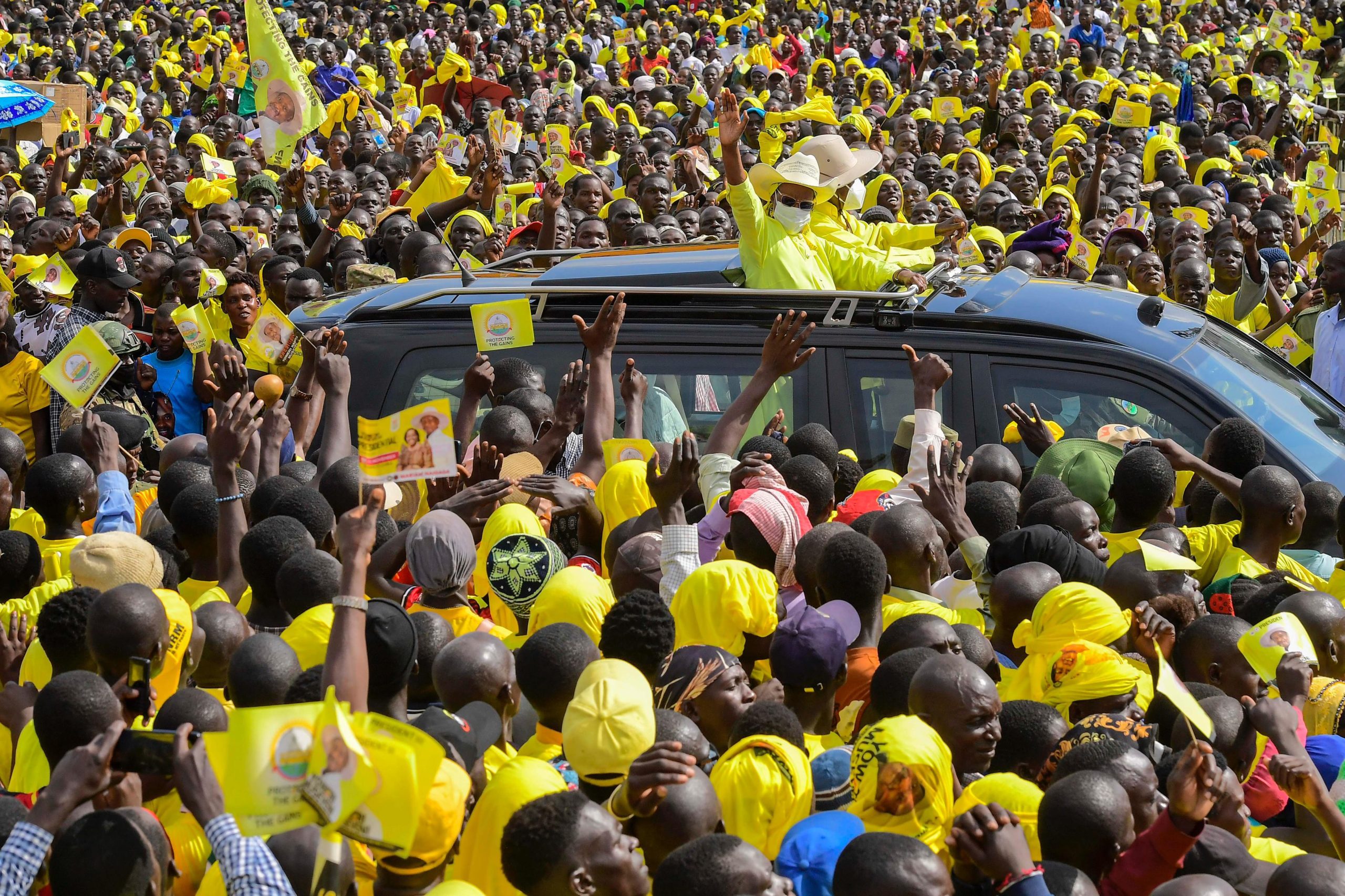
President Yoweri Museveni and First Lady Maama Janet Museveni on Tuesday rallied thousands of supporters at Kizinda Playground in Bushenyi District, calling for the protection of peace and renewed support for the NRM as the country heads toward the 2026 general elections.

Maama Janet Museveni praised the people of Bushenyi for their visible progress in household development, organised farming, and the proper maintenance of government programmes. She said the impressive transformation was evident as they flew into the district and likened it to the notable improvements in Mbarara City.

“You have made a bold statement like the people of Mbarara,” she said. “We should always remember that peace is important, and we must ensure that we protect it. Most of you are young, but this peace was achieved through a long struggle.”

She encouraged all eligible voters not only to turn up on voting day but also to mobilise their families and neighbours. “Do not stay home. Go and vote so that we can continue enjoying peace,” she added.

President Museveni, the NRM Presidential Flagbearer, used his address to reflect on the party’s progress over the last four decades, particularly the restoration of national stability. He warned against the dangers of divisive politics, citing Sudan as a country that regressed into conflict despite its former prosperity.

“Here, the situation had also deteriorated because of divisive politics, but we managed to calm it through creating a strong army and police,” he said.

On infrastructure, Museveni highlighted ongoing and planned government investments in the region. He assured residents that the worn-out section of the Mbarara–Kasese road between Mbarara and Bushenyi would soon be rehabilitated, saying funds had been secured and a contractor identified. He also confirmed the upcoming construction of the Kitabi–Kitagata–Rwamabondo road and urged local leaders to support government prioritisation to ensure key projects are completed effectively.

Museveni expressed concern over continued electricity fluctuations despite adequate national generation and promised to follow up with the responsible agencies.

Highlighting improvements in social services, the President noted Bushenyi’s extensive education infrastructure—151 government-aided primary schools, 16 public secondary schools, 155 private primary schools and 67 private secondary schools. He said this reflected growing household prosperity and the community’s ability to pay school fees. In health, he attributed the district’s rising population, now at 300,000, to improved services and widespread immunisation.

Museveni announced a series of health facility upgrades, including elevating Kajunju and Kashenyi Health Centre IIs to Health Centre III status, constructing three new Health Centre IIIs, and upgrading one Health Centre IV to a district hospital.

He, however, cautioned residents that improved infrastructure does not automatically translate into wealth. He encouraged households to embrace commercial agriculture, referencing successful practitioners like Matonga of Nakaseke and Minister Byamukama, who have utilised the four-acre model to thrive in dairy, coffee, poultry and piggery. For those with larger landholdings, he recommended tea growing, noting that China had not imposed taxes on Ugandan tea exports.

Museveni said only 30% of Ugandans remain outside the money economy and urged greater participation in wealth-creation sectors such as commercial agriculture, manufacturing and artisanship, services like tourism and hospitality, and ICT.

On job creation, the President cited industrial parks as major employment hubs, revealing that the Mbale Industrial Park alone employs 12,000 people. He added that government is in the process of securing land for a new industrial park to further expand job opportunities.

Museveni concluded his address by urging the people of Bushenyi to continue supporting the NRM’s economic transformation agenda as the nation approaches the 2026 polls.

Continue Reading

News

Pope Leo To Trump: Avoid Military Action in Venezuela

Published

on

By

Pope Leo has cautioned the administration of U.S. President Donald Trump against using military force to oust Venezuelan President Nicolás Maduro, urging Washington to instead prioritize dialogue and apply economic pressure if it seeks political change in Caracas.

Speaking to reporters aboard his return flight from Turkey and Lebanon—his first overseas trip since being elected in May—the first U.S.-born pope emphasized that armed intervention would only escalate tensions.

“It is better to search for ways of dialogue, or perhaps pressure, including economic pressure,” Pope Leo said when asked about President Trump’s threats to remove Maduro by force. He added that the United States should “search for other ways to achieve change, if that is what they want to do.”

His remarks follow a Reuters report indicating that Washington has been weighing options—including a potential attempt to overthrow Maduro—amid accusations that the Venezuelan leader is involved in drug trafficking that has harmed Americans. Maduro has repeatedly denied such allegations.

Pope Leo noted that U.S. signals regarding its Venezuela policy have been inconsistent. “On one hand, it seems there was a call between the two presidents,” he said, referring to a recent phone conversation between Trump and Maduro. “On the other hand, there is the danger, there is the possibility there will be some activity, some (military) operation. The voices that come from the United States, they change with a certain frequency.”

Originally from Chicago and having spent many years serving in Peru, Pope Leo is deeply familiar with Latin America’s political landscape—experience that informs his call for restraint and dialogue over confrontation.

Continue Reading

News

EU Envoy Sadek Visits Phaneroo, Commends the Ministry’s Impact on Ugandan Youth

Published

on

By

On Thursday, 27 November 2025, the Ambassador of the European Union (EU) to Uganda, Jan Sadek, attended a service at Phaneroo Ministries International, held at the Phaneroo Grounds in Naguru.

The visit marked a significant gesture of cultural and spiritual engagement, as the envoy sought to gain firsthand insight into Uganda’s social and religious life, beyond traditional diplomacy.

Addressing the thousands gathered, Ambassador Sadek shared his impressions, noting that although he resides in Kololo and often hears what some dismiss as “noise” ― presumably nightlife or club music ― the sounds emanating from Phaneroo on Thursdays and Sundays are different.

“What I heard was beautiful music,” he said, adding that witnessing the gathering in person helped him understand the attraction.

The envoy described the ministry’s founder, Grace Lubega, as a “phenomenon,” urging more people — including non-believers — to visit the fellowship. As a diplomat, he emphasized that part of his role is not only to handle political and economic affairs, but also to understand the social and spiritual dynamics that shape communities in Uganda.

Ambassador Sadek expressed gratitude for the warm reception and the inclusive spirit of the congregation. He said he was humbled to have been part of such a gathering, acknowledging that Phaneroo welcomes people from different backgrounds and opens its arms to anyone seeking fellowship.

Founded in 2014, Phaneroo Ministries International has grown into one of Uganda’s most prominent evangelical Christian fellowships. With vibrant worship sessions and dynamic preaching, the ministry attracts tens of thousands weekly, drawing especially young urban professionals and students. Through weekly services, digital broadcasts, community-outreach programmes, discipleship, and regional fellowships, the church’s influence now extends beyond Uganda’s borders.

Continue Reading

Trending

Copyright © 2017 Zox News Theme. Theme by MVP Themes, powered by WordPress.