Connect with us

News

THE TRUTH! Why Pope Francis is visiting DR Congo & South Sudan in 6-day trip

Published

on

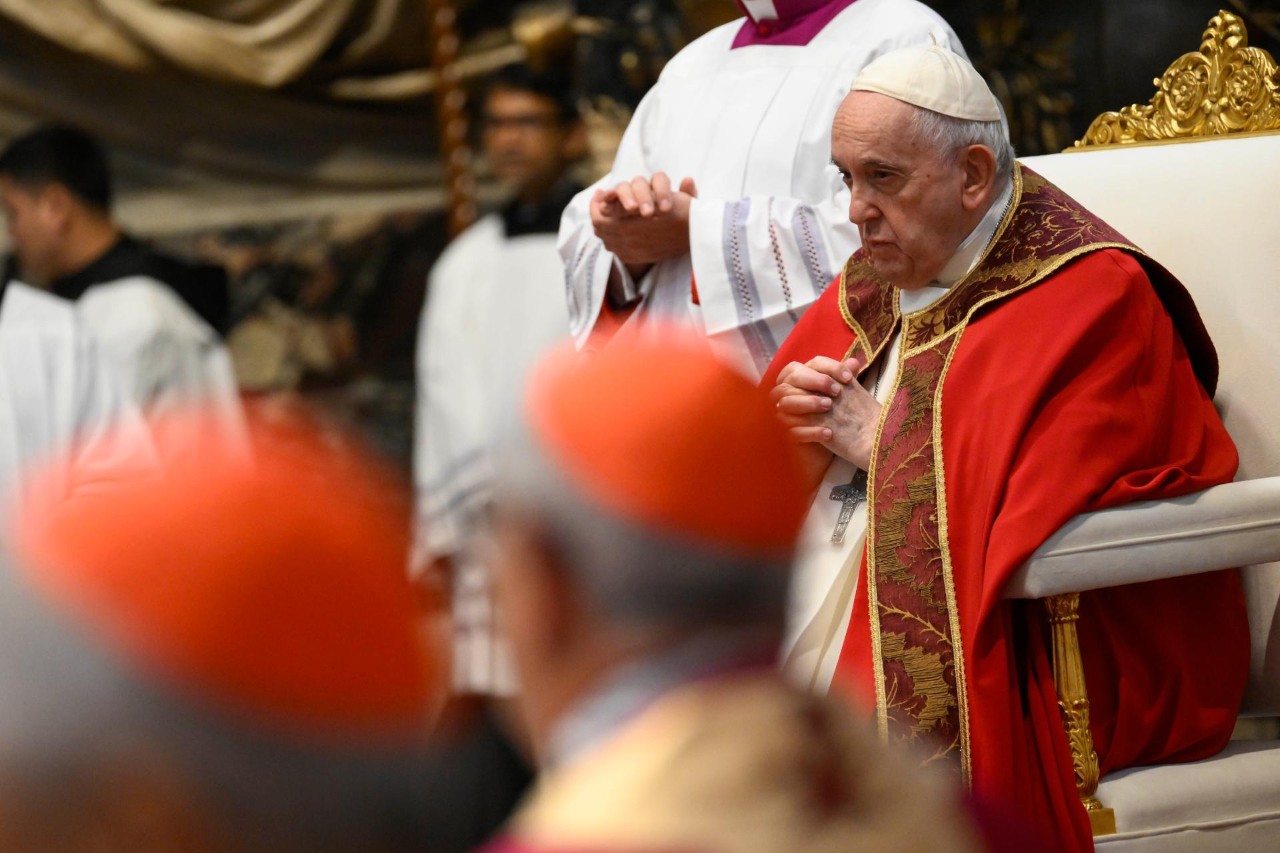
Pope Francis is visiting the Democratic Republic of the Congo and South Sudan this week to deliver a message of peace and reconciliation to two countries hit by conflict.

The pontiff will start his trip on Tuesday in the Congolese capital Kinshasa, where he will stay until Friday before heading to Juba, the capital of South Sudan.

The leaders of the Anglican Church and the Church of Scotland will join the pope on the second leg of the trip.

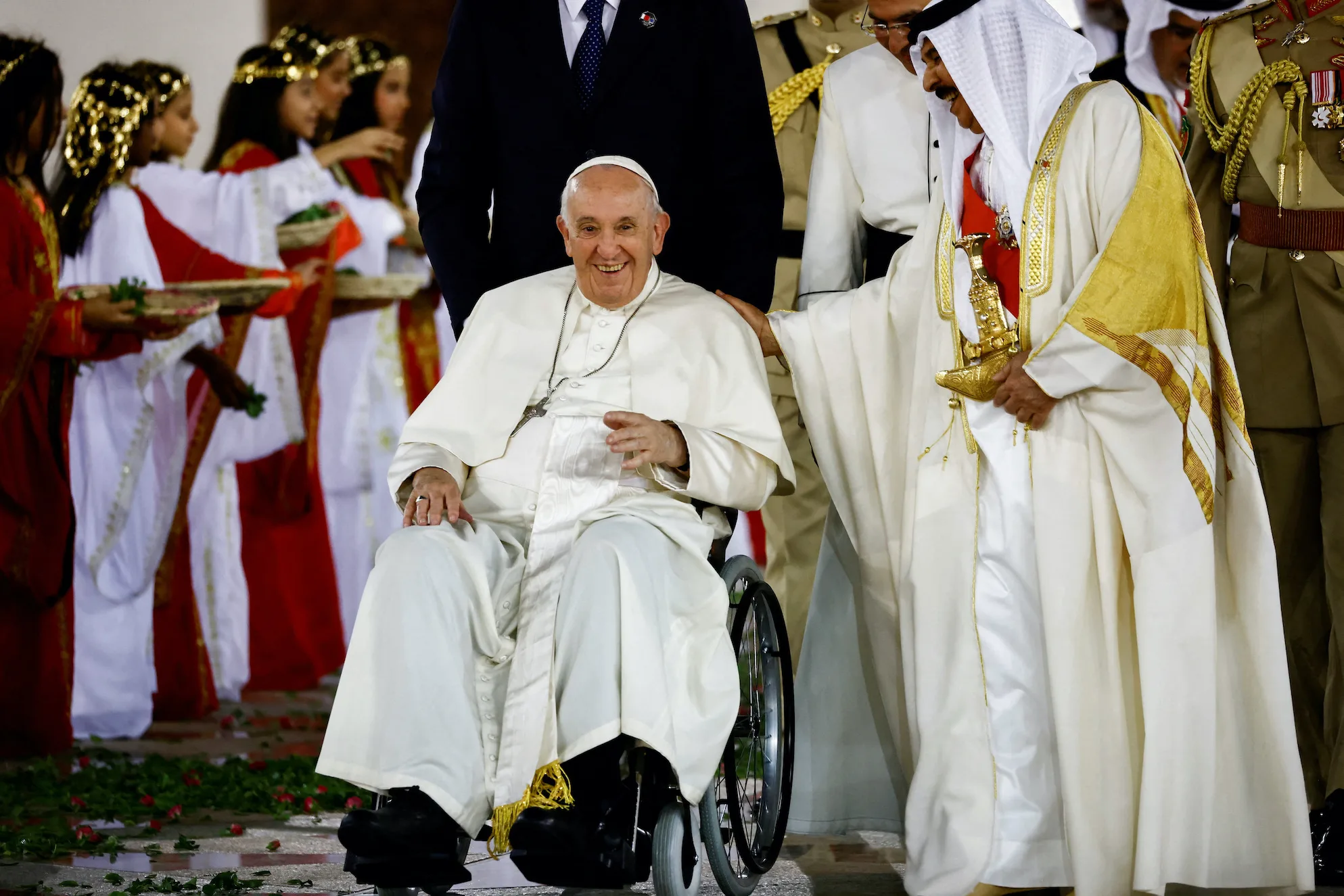
The six-day trip was originally planned for July 2022 but was postponed after Francis suffered problems with his knee, which have recently forced him to use a wheelchair.

The trip will be Francis’s 40th abroad since he was elected the head of the Catholic Church in 2013. It will be his fifth visit to Africa.

Why is the pope visiting the DRC?

The Vatican’s envoy to the Democratic Republic of the Congo has said the trip will remind the world not to ignore decades-long conflicts.

For years, the Central African country has struggled with instability and poverty despite its vast mineral wealth.

“Congo also embodies social injustice, the scandal of underdevelopment and poverty,” said Samuel Pommeret from the nongovernmental organisation CCFD-Terre Solidaire.

It has been a battleground for more than 100 armed groups fighting for control of territory there or using it as a base to launch attacks into some of the DRC’s neighbours, such as Angola, Burundi, the Central African Republic, Rwanda and Uganda.

The best known is M23, which is among the most deadly in North Kivu and Ituri, two eastern mining provinces bordering Rwanda and Uganda. The Congolese government, United Nations experts and the European Union have accused Rwanda of backing the rebels, a charge Kigali denies.

The conflict has displaced half a million people and killed hundreds.

“The pope’s voice will be hugely encouraging for the country but will also be a strong spur to the political classes to resolve the country’s problems,” Mauro Garofalo, head of international relations at the Rome-based Community of Sant’Egidio, a Catholic social services organisation, told the Agence France-Presse news agency.

Francis will be the first pope to visit the country since 1985, which “could also deliver a message for the economic actors who benefit from these riches”, Pommeret said.

About 45 million people of the DRC’s estimated population of 100 million are Catholics. More than a million people are expected to attend an open-air Mass that Francis is to celebrate on Wednesday at Kinshasa airport.

Why is the pope visiting South Sudan?

The pope has expressed interest in visiting predominantly Christian South Sudan for years, but plans were pushed back due to his health and instability in the country.

The pontiff is expected to deliver an appeal for peace with the archbishop of Canterbury, Justin Welby, and the moderator of the Church of Scotland, Iain Greenshields.

In 2019, the leaders of the Catholic, Anglican and Scottish churches met at the Vatican with South Sudan rivals Riek Machar and Salva Kiir to encourage them to salvage a stalled peace deal signed the year before.

In an act that stunned the world, Francis knelt and kissed the duo’s feet, urging them not to return to conflict after both men had been accused of responsibility for war crimes.

South Sudan, the world’s newest nation, officially split from Sudan in 2011, but civil war erupted two years later, causing 400,000 deaths. The two main sides in the conflict signed a peace deal in 2018, but there are lingering issues.

There are 2.2 million internally displaced people in South Sudan and another 2.3 million have fled the country, according to the UN.

In June, the UN cut food aid to South Sudan because of inadequate funding. Aid organisations said donors had diverted attention to the war in Ukraine. The UN said 7.76 million people, about two-thirds of South Sudan’s population, are likely to face acute food shortages this year.

“This is a very important element in the South Sudanese crisis,” Garofalo said. “The joint work of the Christian churches and denominations can represent an antidote to the ethnicism and political rivalry.”

Are there security concerns?

Security concerns have surrounded the pope’s visit to both countries.

Francis plans to travel to the eastern DRC, where M23 advanced close to the commercial hub of Goma in its latest offensive.

His new itinerary no longer includes Goma, the capital of North Kivu province. The pope will instead meet victims of the conflict while in Kinshasa, where security is not expected to be an issue.

Despite the peace agreement in South Sudan, the country still faces instability as parts of the agreement, including the deployment of a reunified national army, have not yet been implemented.

AL JAZEERA

News

Pope Leo XIV appoints members of International Theological Commission

Published

on

By

Pope Leo XIV

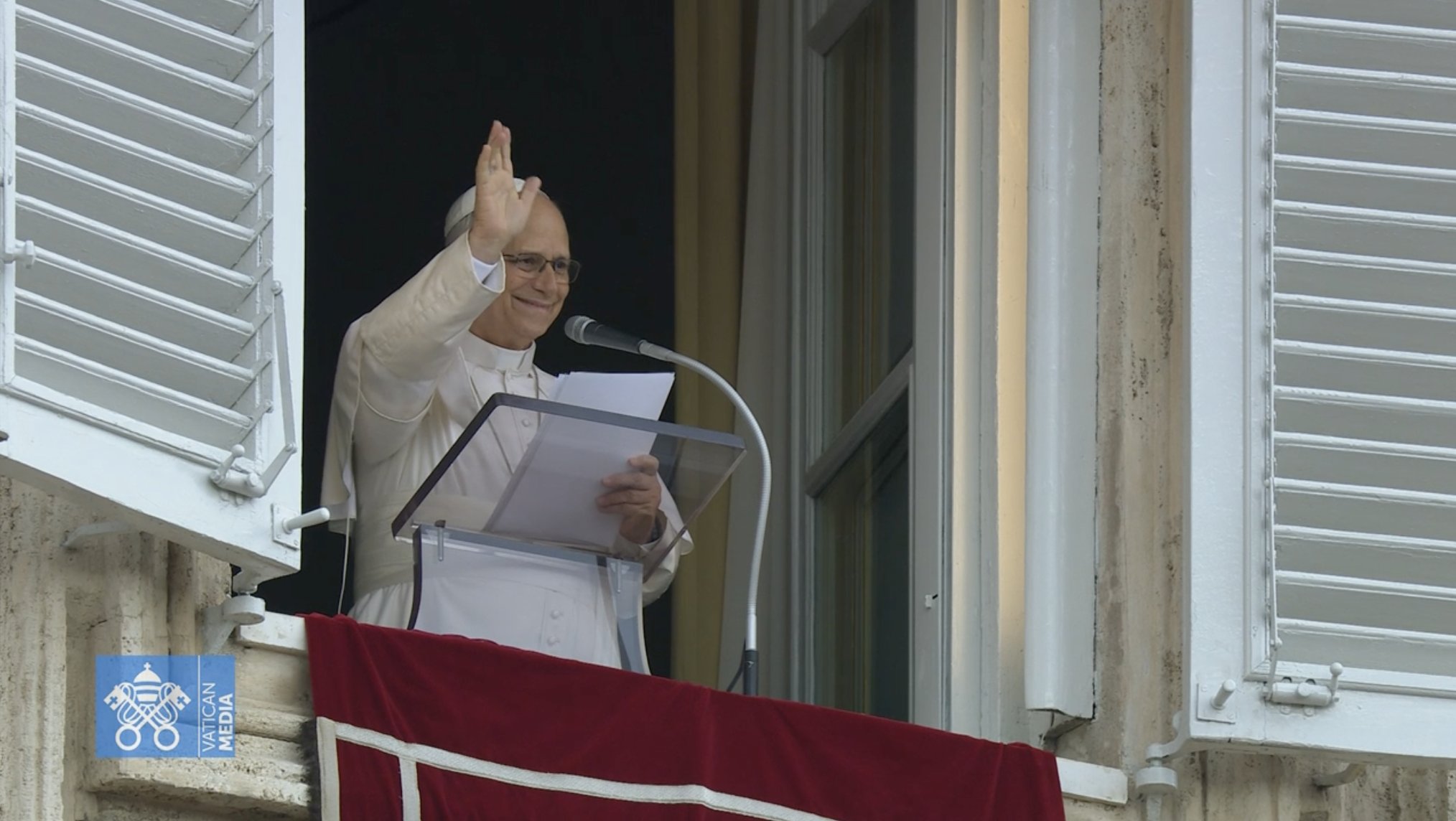
On Monday, Pope Leo XIV appointed 24 new members, confirming 6 others, including Msgr. Piero Coda for another five years as the Commission’s Secretary General.

The Commission bears the task of assisting the Holy See, particularly the Dicastery for the Doctrine of the Faith, in examining doctrinal questions of major importance and current relevance, bringing together theologians from different schools and nations.

As in the previous five years, the members also reflect a variety of ecclesial backgrounds, representing different states of life and religious charisms.

Increased lay representation

The number of women on the Commission has risen from five to eight, including five laywomen. Together with three laymen, they bring the total number of lay members to eight, double that of the previous term.

Europe accounts for 13 members, compared with 14 previously. Asia and Africa each have four representatives, up from three each, while South America has five, compared with four. North America retains three members, and Australia one.

The appointments mark the beginning of the Commission’s eleventh five-year term. Its customary plenary session is scheduled for November 23–27.

The Commission’s membership

The Holy See Press Office published the list of the Commission’s new members:

Monsignor Carlo Dell’Osso, Secretary of the Pontifical Institute of Christian Archaeology;

Monsignor Lubomír Žák, Full Professor at the Saints Cyril and Methodius Faculty of Theology of Palacký University Olomouc, Czechia;

Father Khaled Emmanuel Anatolios, Chair of the Department of Theology at the University of Notre Dame in South Bend, United States;

Father Ángel Cordovilla Pérez, Dean of the Faculty of Theology and the Faculty of Canon Law at Comillas Pontifical University in Madrid, Spain;

Father Tiago de Fraga Gomes, Professor at the School of Humanities of the Pontifical Catholic University of Rio Grande do Sul in Porto Alegre, Brazil;

Father Gilbert De Lima, Executive Secretary of the Commission for Theology and Doctrine of the Conference of Catholic Bishops of India;

Father Clarence Devadass, Director of the Catholic Research Centre in Kuala Lumpur, Malaysia;

Father Fabricio Leonel Forcat, Associate Professor at the Faculty of Theology of the Pontifical Catholic University of Argentina in Buenos Aires, Argentina;

Father Julián Arturo López Amozurrutia, Dean of the Faculty of Theology of the Pontifical University of Mexico;

Father Gaston Ogui Cossi, Dean of the Bobo-Dioulasso University Unit of the Catholic University of West Africa, Benin;

Father Csaba Török, Associate Professor at Esztergom Theological College, affiliated with the Faculty of Theology of Pázmány Péter Catholic University, Hungary;

Father Paul Béré, S.J., Dean of the Biblical Faculty of the Pontifical Biblical Institute of the Pontifical Gregorian University in Rome, Italy;

Father Michel Fédou, S.J., Professor Emeritus of the Faculty of Theology at Facultés Loyola Paris, France;

Father Bernhard Knorn, S.J., Full Professor at Sankt Georgen Graduate School of Philosophy and Theology in Frankfurt am Main, Germany;

Father Patrick Mwania, C.S.Sp., Vice Chancellor of Tangaza University in Nairobi, Kenya;

Father Jorge Alejandro Scampini, O.P., Full Professor at the Faculty of Theology of the Pontifical Catholic University of Argentina in Buenos Aires, Argentina;

Sister Shu Chin (Maria Teresa) Hu, F.I., Extraordinary Professor at the Fu Jen Faculty of Theology of Saint Robert Bellarmine in Taipei, Taiwan;

Professor Teresa Hyeon Soon Choi, Associate Professor at the Institute for Whole Person Education Center of Sogang University in Seoul, South Korea;

Professor Boyd Taylor Coolman, Associate Professor in the Theology Department at Boston College in Chestnut Hill, United States;

Professor Maria Teresa Fattori, Researcher at the University of Teramo, Italy;

Professor Claudia Leal Luna, Full Professor at the Pontifical John Paul II Theological Institute for Marriage and Family Sciences in Rome, Italy;

Professor Sara Parvis, Associate Professor at the School of Divinity of the University of Edinburgh, Scotland, United Kingdom;

Professor Jan-Heiner Tück, Head of the Department of Dogmatic Theology and the History of Dogma at the University of Vienna, Austria;

Professor Anne-Sophie Vivier-Muresan, Dean of the Faculty of Theology at the Catholic Institute of Paris, France.

The full list also includes the six members confirmed for another five-year term: Msgr. Piero Coda, Secretary General; Father Alberto Cozzi; Father Simon Francis Gaine; Professor Reinhard Huetter; Sister Isabell Naumann; and Sister Josee Ngalula.

Serving the Church’s doctrinal work

Pope Paul VI established the International Theological Commission in 1969 within the then-Congregation for the Doctrine of the Faith, now the Dicastery.

The Commission brings together theologians from different schools and nations, distinguished by their scholarship and fidelity to the Church’s Magisterium.

Its members, numbering no more than 30, are appointed by the Pope for five-year terms, following a proposal by the Dicastery’s Prefect and consultation with Bishops’ Conferences.

The results of its studies are submitted to the Pope and made available to the Dicastery for its work.

Pope John Paul II promulgated the Commission’s definitive statutes in 1982.

Over the course of its history, the Commission has published 33 documents with the approval of its president, the Prefect of the Dicastery for the Doctrine of the Faith.
Continue Reading

News

Fr Ssekabira Accused of Shs500m Money Laundering Remanded

Published

on

By

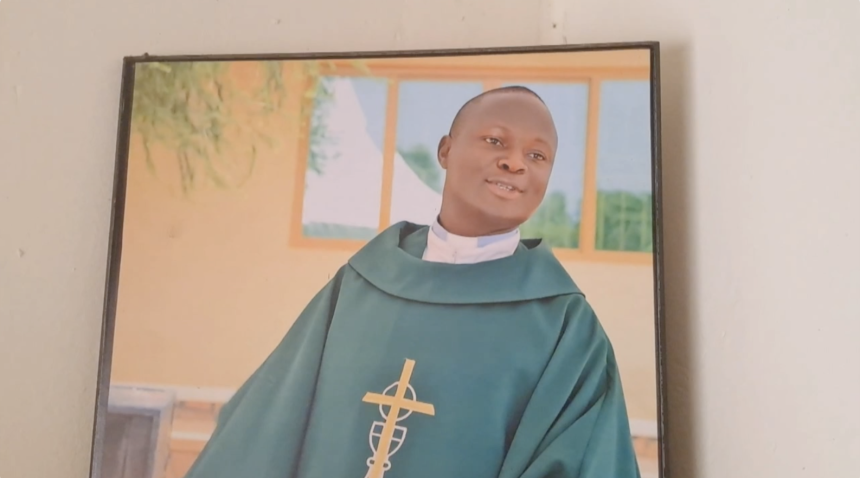
Rev. Fr. Deusdedit Ssekabira, a Catholic priest who had been detained for weeks following his arrest by Uganda Peoples’ Defence Forces (UPDF) soldiers in Masaka District earlier this month, has appeared before the Masaka Magistrate’s Court for the first time.

However, the presiding magistrate, Abdallah Kayiza, remanded Fr. Ssekabira until January 21, 2026, after ruling that the court lacks jurisdiction to hear the money laundering case.

Fr. Ssekabira is accused of money laundering, with prosecutors alleging that he concealed Shs500 million, which the state claims he knew or suspected to be proceeds of crime. The charge is brought under provisions of the Anti-Money Laundering Act.

Court documents indicate that the alleged offence relates to financial transactions carried out over a period spanning several years, though details of the prosecution’s evidence were not presented during the brief appearance, as the court did not take plea.

The priest’s court appearance comes after weeks of public uncertainty over his whereabouts. Early this month, reports circulated on social media claiming he had been abducted by armed men believed to be soldiers. The Uganda Police Force later said it was verifying the reports.

Subsequently, the UPDF confirmed that Fr. Ssekabira was in lawful custody, stating that he had been arrested over alleged involvement in what the military described as “violent subversive activities against the state.” The military did not initially disclose that he would face financial crime charges.

Fr. Ssekabira will remain on remand as the state prepares to take the case to a court with competent jurisdiction to hear money laundering offences. There was no immediate comment from his lawyers or from the Catholic Church following the court session.

Continue Reading

News

American Missionary Dies in Kampala Train Accident

Published

on

By

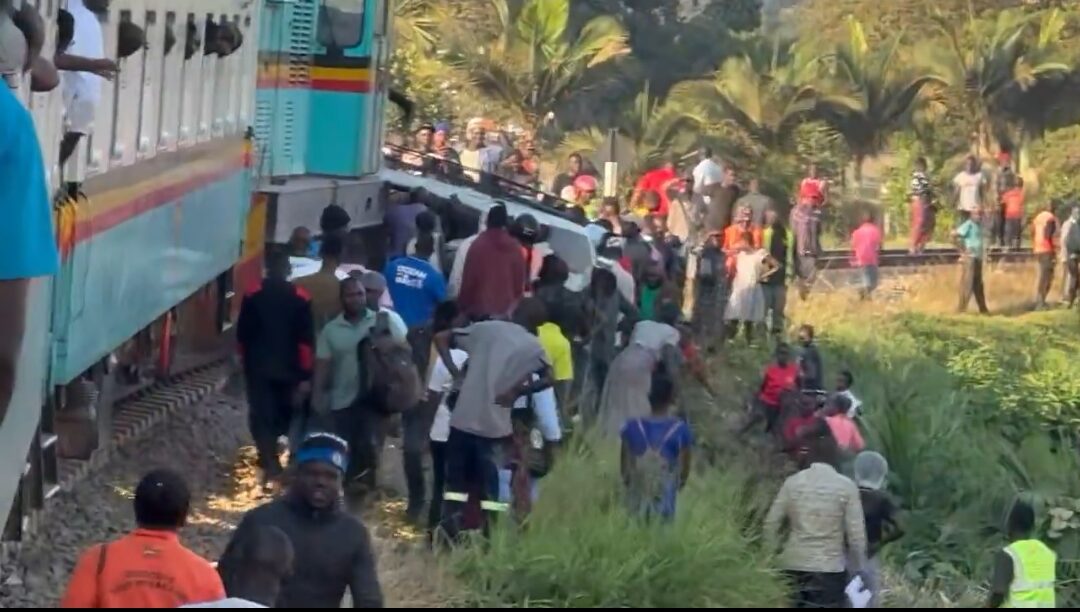
A tragic train–vehicle collision at the Wankoko level crossing in Bugolobi has claimed the life of an American missionary, Savannah Gardner, Ugandan authorities have confirmed.

According to a statement issued by Uganda Railways Corporation (URC), the accident occurred on the evening of Friday, December 19, at about 5:37pm, involving a commuter train travelling from Kampala to Namanve and a private motor vehicle, a Mitsubishi Pajero, registration number UBF 582X.

URC said the level crossing was manned by both Railway Police and URC staff at the time, and traffic on all approaches had been halted to allow the train to pass. Preliminary reports indicate that the vehicle attempted to cross the railway line, resulting in a collision with the oncoming train.

Savannah Gardner died at the scene. Her husband, Matthew Gardner, sustained internal injuries and is currently receiving treatment in hospital. Their two young children, Jedidiah (4) and Mason (1), were not injured.

The Gardner family are missionaries serving in Uganda under Baptist International Missions, Inc. (BIMI). A prayer appeal shared by fellow missionaries said Savannah “went to Heaven instantly,” while noting that Matthew remains hospitalised but in stable condition.

URC said it has launched internal investigations and is cooperating fully with the Uganda Police Force to establish the exact circumstances surrounding the incident.

“Our heartfelt condolences go out to the family of the late Savannah Gardner,” URC said in its statement, while urging all road users to exercise extreme caution when approaching railway crossings.

The incident has renewed public attention on road and rail safety in Kampala, particularly at level crossings along busy urban routes.

Continue Reading

Trending

Copyright © 2017 Zox News Theme. Theme by MVP Themes, powered by WordPress.