Connect with us

News

DEFIANCE! Catholic bishops reject Pope’s stance on blessings for same-sex couples

Published

on

In an extraordinary pushback against Pope Francis, some Catholic bishops in Africa, Poland and elsewhere say they will not implement the new Vatican policy allowing blessings for same-sex couples.

Others downplayed the policy approved this week by Francis as merely reaffirming the Vatican’s long-standing teaching about marriage being only a union between a man and a woman.

The reactions show how polarizing the issue remains and how Francis’ decade-long effort to make the church a more welcoming place for the LGBTQ+ community continues to spark resistance among traditionalist and conservative Catholic leaders.

Some of the strongest responses came from bishops in Africa, home to 265 million Catholics, or nearly a quarter of the world’s 1.3 billion Catholics. Many of those Catholics live and their churches operate in societies where homosexuality is condemned and outlawed.

Out of the continent’s 54 countries, 31 have laws criminalizing homosexuality, more than any other continent, according to the Human Dignity Trust, which defends LGBTQ+ rights.

Zambia’s bishops conference said same-sex couple blessings were “not for implementation in Zambia.” The bishops conference of Malawi said “blessings of any kind” for “same-sex unions of any kind” would not be permitted.

In Zambia, gay sex is punishable by between 15 years and life in prison and the law puts it in the same section as bestiality. Malawi’s laws call for up to 14 years in prison for homosexual sex, with the option of corporal punishment for those convicted.

Zambian bishops said there should be “further reflection” on the blessings and cited the country’s laws against homosexuality and its “cultural heritage” that rejects same-sex relationships as reasons for its decision.

The Polish bishops conference — among the most conservative in Europe and a reference point beyond the continent given its ties to St. John Paul II — said it has no plans to give blessings to same-sex couples.

Marriage, the conference asserted, remains only the union between a man and a woman, and sexual acts outside of that are “always an offense against God’s will,” according to a statement by spokesperson Rev. Leszek Gęsiak.

It is unusual for an entire national bishops conference to publicly voice dissent of a Vatican policy, though the declaration from the Vatican doctrine office did not instruct bishops to allow blessings of same-sex couples but merely provided guidance on how they could be done if people requested them.

The document, entitled “Fiducia Supplicans,” says that blessings can be offered to people in same-sex relationships if they are not confused with the ritual of marriage and reaffirmed that marriage is a lifelong union only between a man and a woman.

The announcement Monday by the Vatican office reversed its 2021 statement that had ruled out blessings for same-sex couples because God “cannot bless sin.”

The U.S. bishops conference, seeking to downplay any shift, stressed that the church’s teachings on marriage have not changed and that the announcement “articulated a distinction between liturgical (sacramental) blessings, and pastoral blessings, which may be given to persons who desire God’s loving grace in their lives,” according to a statement.

Some of the more piqued opposition came from Francis’ usual critics.

German Cardinal Gerhard Müller, who previously headed the Vatican doctrine office, said the declaration was “self-contradictory” as it still said same-sex relationships were contrary to God’s law while allowing same-sex couples to receive a blessing.

“The church cannot celebrate one thing and teach another,” Müller wrote in an essay published in religious media outlets.

Kazakh Bishop Athanasius Schneider, who has long opposed Francis’ progressive bent, called the new policy a “great deception.” Priests should be aware of “the evil that resides in the very permission to bless couples in irregular situations and same-sex couples,” he said.

He and Kazakh Archbishop Tomash Peta said in a statement on the Catholic Herald magazine’s website that they had prohibited priests in their archdiocese from performing “any form of blessing whatsoever” for same-sex couples.

Bishop conferences and church leaders from Nigeria, Ghana, Kenya, Madagascar and South Africa also released public statements, most of them moving to clarify what they said was confusion among their flock over whether the new policy was an official recognition and acceptance of same-sex relationships.

The predominant sentiment among many was a fear that the move was a step toward the Catholic church accepting homosexuality.

Nigeria’s bishops said there had been various interpretations of the policy in Nigeria, Africa’s most populous nation and home to 20-30 million Catholics, and they needed to make clear that the Vatican document does not allow for a blessing and a formal acceptance of same-sex relationships.

“The Catholic Bishops Conference of Nigeria assures the entire People of God that the teaching of the Catholic Church on marriage remains the same,” it said. “There is, therefore, no possibility in the Church of blessing same-sex unions and activities.”

Abbé Jean-Marie Djibo, a priest in the Archdiocese of Bamako in the Muslim-majority West African nation of Mali, said the Catholic church in his country would not be following any new policy and wanted the Vatican to explain its decision.

“The church in Mali does not agree with the Vatican’s decision concerning homosexual couples, and the bishops and priests here are calling the church faithful to reassure them that this decision will not be applied,” he said. “This decision concerns only the Vatican, not us.”

“In his message, the Pope used coded words that have been variously interpreted, so we want him to clarify this position for us,” Djibo added.

In the United Kingdom, an organization representing some 500 Catholic priests in Britain released a signed letter reaffirming the Church’s teaching regarding marriage and same-sex unions after “widespread confusion.”

In Zimbabwe, which also has anti-gay laws, LGBTQ+ rights activist Chesterfield Samba said he did not think the declaration would change anything for Zimbabwean same-sex couples shunned by the church. He said he had expected the pushback from some church branches.

The Southern African Catholic Bishops Conference, which is based in South Africa where a liberal constitution allows same-sex marriages, appeared to welcome the prospect of blessings for gay couples as confirmation that “nobody is outside God’s grace.”

But it added that its interpretation of the declaration was that “the blessing is done with the hope of conversion.”

Associated Press

Continue Reading
Click to comment

Leave a Reply

Your email address will not be published. Required fields are marked *

News

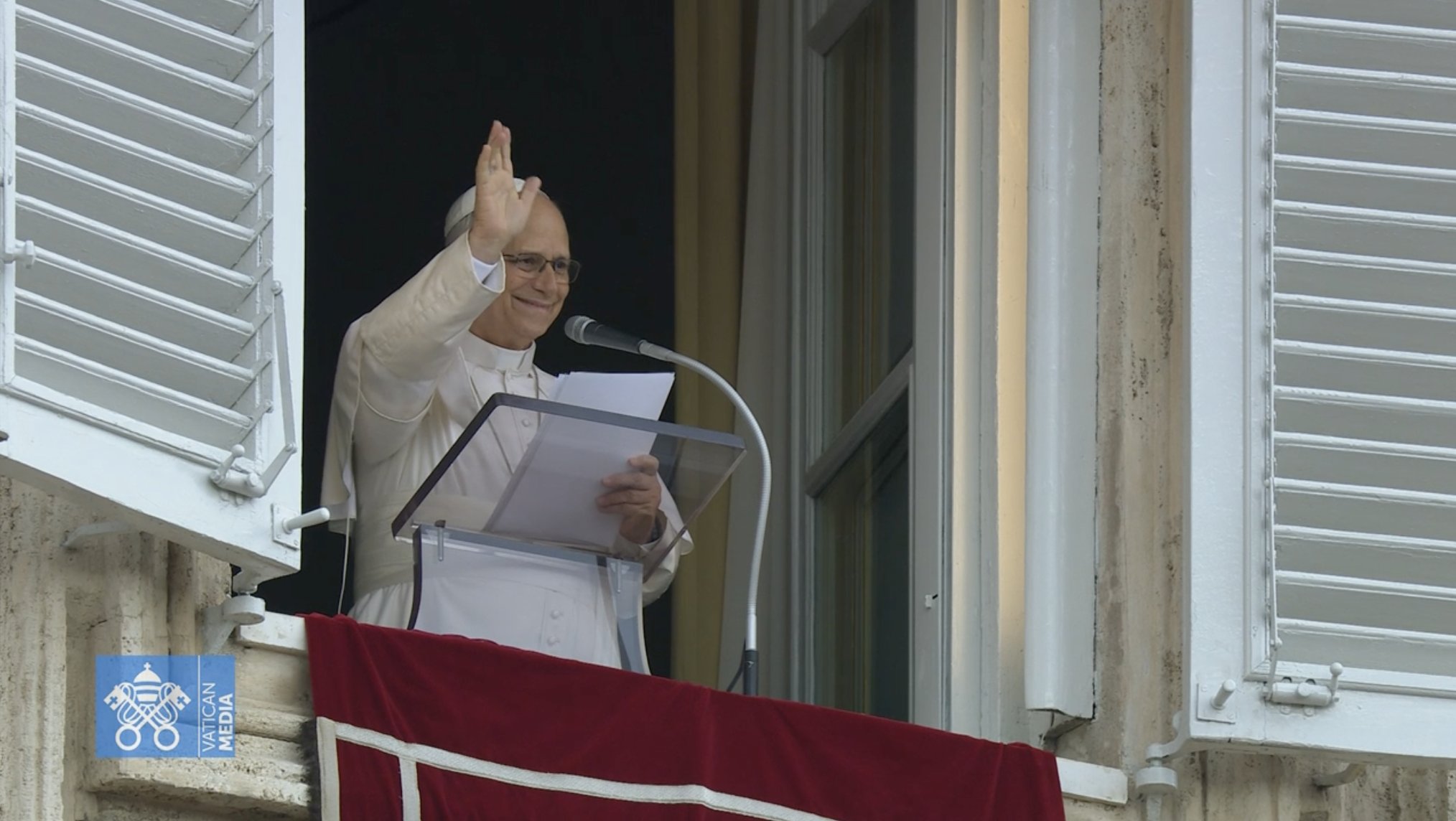
Pope Leo XIV appoints members of International Theological Commission

Published

on

By

Pope Leo XIV

On Monday, Pope Leo XIV appointed 24 new members, confirming 6 others, including Msgr. Piero Coda for another five years as the Commission’s Secretary General.

The Commission bears the task of assisting the Holy See, particularly the Dicastery for the Doctrine of the Faith, in examining doctrinal questions of major importance and current relevance, bringing together theologians from different schools and nations.

As in the previous five years, the members also reflect a variety of ecclesial backgrounds, representing different states of life and religious charisms.

Increased lay representation

The number of women on the Commission has risen from five to eight, including five laywomen. Together with three laymen, they bring the total number of lay members to eight, double that of the previous term.

Europe accounts for 13 members, compared with 14 previously. Asia and Africa each have four representatives, up from three each, while South America has five, compared with four. North America retains three members, and Australia one.

The appointments mark the beginning of the Commission’s eleventh five-year term. Its customary plenary session is scheduled for November 23–27.

The Commission’s membership

The Holy See Press Office published the list of the Commission’s new members:

Monsignor Carlo Dell’Osso, Secretary of the Pontifical Institute of Christian Archaeology;

Monsignor Lubomír Žák, Full Professor at the Saints Cyril and Methodius Faculty of Theology of Palacký University Olomouc, Czechia;

Father Khaled Emmanuel Anatolios, Chair of the Department of Theology at the University of Notre Dame in South Bend, United States;

Father Ángel Cordovilla Pérez, Dean of the Faculty of Theology and the Faculty of Canon Law at Comillas Pontifical University in Madrid, Spain;

Father Tiago de Fraga Gomes, Professor at the School of Humanities of the Pontifical Catholic University of Rio Grande do Sul in Porto Alegre, Brazil;

Father Gilbert De Lima, Executive Secretary of the Commission for Theology and Doctrine of the Conference of Catholic Bishops of India;

Father Clarence Devadass, Director of the Catholic Research Centre in Kuala Lumpur, Malaysia;

Father Fabricio Leonel Forcat, Associate Professor at the Faculty of Theology of the Pontifical Catholic University of Argentina in Buenos Aires, Argentina;

Father Julián Arturo López Amozurrutia, Dean of the Faculty of Theology of the Pontifical University of Mexico;

Father Gaston Ogui Cossi, Dean of the Bobo-Dioulasso University Unit of the Catholic University of West Africa, Benin;

Father Csaba Török, Associate Professor at Esztergom Theological College, affiliated with the Faculty of Theology of Pázmány Péter Catholic University, Hungary;

Father Paul Béré, S.J., Dean of the Biblical Faculty of the Pontifical Biblical Institute of the Pontifical Gregorian University in Rome, Italy;

Father Michel Fédou, S.J., Professor Emeritus of the Faculty of Theology at Facultés Loyola Paris, France;

Father Bernhard Knorn, S.J., Full Professor at Sankt Georgen Graduate School of Philosophy and Theology in Frankfurt am Main, Germany;

Father Patrick Mwania, C.S.Sp., Vice Chancellor of Tangaza University in Nairobi, Kenya;

Father Jorge Alejandro Scampini, O.P., Full Professor at the Faculty of Theology of the Pontifical Catholic University of Argentina in Buenos Aires, Argentina;

Sister Shu Chin (Maria Teresa) Hu, F.I., Extraordinary Professor at the Fu Jen Faculty of Theology of Saint Robert Bellarmine in Taipei, Taiwan;

Professor Teresa Hyeon Soon Choi, Associate Professor at the Institute for Whole Person Education Center of Sogang University in Seoul, South Korea;

Professor Boyd Taylor Coolman, Associate Professor in the Theology Department at Boston College in Chestnut Hill, United States;

Professor Maria Teresa Fattori, Researcher at the University of Teramo, Italy;

Professor Claudia Leal Luna, Full Professor at the Pontifical John Paul II Theological Institute for Marriage and Family Sciences in Rome, Italy;

Professor Sara Parvis, Associate Professor at the School of Divinity of the University of Edinburgh, Scotland, United Kingdom;

Professor Jan-Heiner Tück, Head of the Department of Dogmatic Theology and the History of Dogma at the University of Vienna, Austria;

Professor Anne-Sophie Vivier-Muresan, Dean of the Faculty of Theology at the Catholic Institute of Paris, France.

The full list also includes the six members confirmed for another five-year term: Msgr. Piero Coda, Secretary General; Father Alberto Cozzi; Father Simon Francis Gaine; Professor Reinhard Huetter; Sister Isabell Naumann; and Sister Josee Ngalula.

Serving the Church’s doctrinal work

Pope Paul VI established the International Theological Commission in 1969 within the then-Congregation for the Doctrine of the Faith, now the Dicastery.

The Commission brings together theologians from different schools and nations, distinguished by their scholarship and fidelity to the Church’s Magisterium.

Its members, numbering no more than 30, are appointed by the Pope for five-year terms, following a proposal by the Dicastery’s Prefect and consultation with Bishops’ Conferences.

The results of its studies are submitted to the Pope and made available to the Dicastery for its work.

Pope John Paul II promulgated the Commission’s definitive statutes in 1982.

Over the course of its history, the Commission has published 33 documents with the approval of its president, the Prefect of the Dicastery for the Doctrine of the Faith.

Continue Reading

News

Fr Ssekabira Accused of Shs500m Money Laundering Remanded

Published

on

By

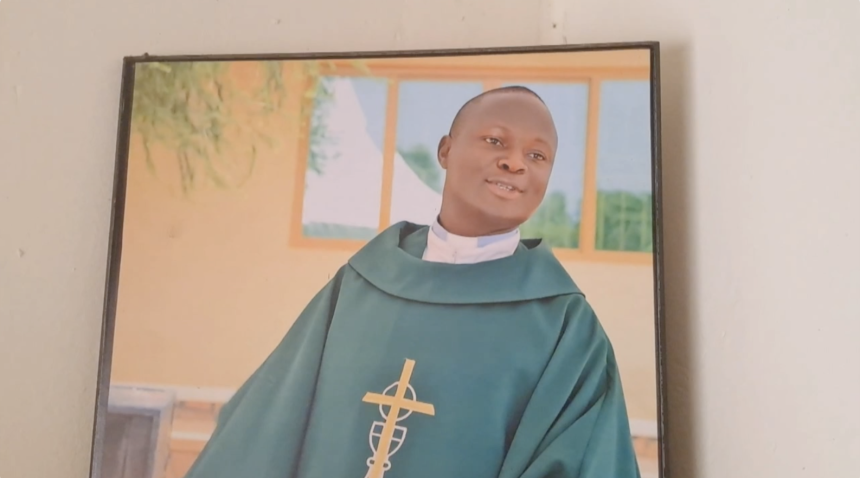
Rev. Fr. Deusdedit Ssekabira, a Catholic priest who had been detained for weeks following his arrest by Uganda Peoples’ Defence Forces (UPDF) soldiers in Masaka District earlier this month, has appeared before the Masaka Magistrate’s Court for the first time.

However, the presiding magistrate, Abdallah Kayiza, remanded Fr. Ssekabira until January 21, 2026, after ruling that the court lacks jurisdiction to hear the money laundering case.

Fr. Ssekabira is accused of money laundering, with prosecutors alleging that he concealed Shs500 million, which the state claims he knew or suspected to be proceeds of crime. The charge is brought under provisions of the Anti-Money Laundering Act.

Court documents indicate that the alleged offence relates to financial transactions carried out over a period spanning several years, though details of the prosecution’s evidence were not presented during the brief appearance, as the court did not take plea.

The priest’s court appearance comes after weeks of public uncertainty over his whereabouts. Early this month, reports circulated on social media claiming he had been abducted by armed men believed to be soldiers. The Uganda Police Force later said it was verifying the reports.

Subsequently, the UPDF confirmed that Fr. Ssekabira was in lawful custody, stating that he had been arrested over alleged involvement in what the military described as “violent subversive activities against the state.” The military did not initially disclose that he would face financial crime charges.

Fr. Ssekabira will remain on remand as the state prepares to take the case to a court with competent jurisdiction to hear money laundering offences. There was no immediate comment from his lawyers or from the Catholic Church following the court session.

Continue Reading

News

American Missionary Dies in Kampala Train Accident

Published

on

By

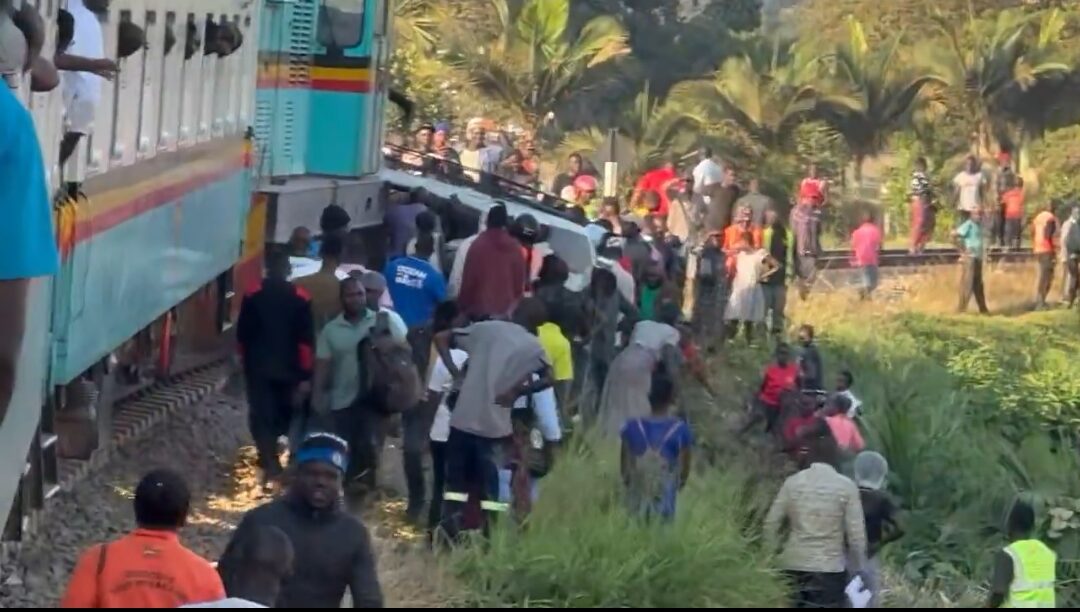
A tragic train–vehicle collision at the Wankoko level crossing in Bugolobi has claimed the life of an American missionary, Savannah Gardner, Ugandan authorities have confirmed.

According to a statement issued by Uganda Railways Corporation (URC), the accident occurred on the evening of Friday, December 19, at about 5:37pm, involving a commuter train travelling from Kampala to Namanve and a private motor vehicle, a Mitsubishi Pajero, registration number UBF 582X.

URC said the level crossing was manned by both Railway Police and URC staff at the time, and traffic on all approaches had been halted to allow the train to pass. Preliminary reports indicate that the vehicle attempted to cross the railway line, resulting in a collision with the oncoming train.

Savannah Gardner died at the scene. Her husband, Matthew Gardner, sustained internal injuries and is currently receiving treatment in hospital. Their two young children, Jedidiah (4) and Mason (1), were not injured.

The Gardner family are missionaries serving in Uganda under Baptist International Missions, Inc. (BIMI). A prayer appeal shared by fellow missionaries said Savannah “went to Heaven instantly,” while noting that Matthew remains hospitalised but in stable condition.

URC said it has launched internal investigations and is cooperating fully with the Uganda Police Force to establish the exact circumstances surrounding the incident.

“Our heartfelt condolences go out to the family of the late Savannah Gardner,” URC said in its statement, while urging all road users to exercise extreme caution when approaching railway crossings.

The incident has renewed public attention on road and rail safety in Kampala, particularly at level crossings along busy urban routes.

Continue Reading

Trending

Copyright © 2017 Zox News Theme. Theme by MVP Themes, powered by WordPress.